If your phone is the first thing you reach for in the morning and the last thing you put down at night, you are not alone. Millions of people feel trapped in a cycle of scrolling, notifications, and screen fatigue that chips away at focus, sleep, and real connection. The good news is that a growing number of phones are designed to do less on purpose.
The best phones without internet access strip away browsers, app stores, and social media while keeping what actually matters: clear calls, reliable texting, and a battery that lasts for days. Whether you are a professional craving fewer distractions, a parent looking for a safer first phone for your child, or someone who simply wants to reclaim your time, a true no-internet phone creates a barrier between you and digital noise that willpower alone cannot match.
This guide breaks down the top options available in 2026, from premium minimalist devices to rugged flip phones built for job sites. You will find honest pros and cons, real-world tradeoffs, and practical advice on matching each phone to your lifestyle. Use our Dumbphone Finder to narrow down your choices.
Why Choose a Phone Without Internet?
Switching to a phone without internet is not about going backward. It is about choosing what gets your attention.
Mental health is often the biggest motivator. Studies and countless user reports point to lower anxiety, less doom-scrolling, and better sleep when the browser and social feeds disappear from your pocket. Without the pull of infinite content, your brain gets actual downtime.
Productivity improves quickly, too. When your phone cannot load email, news, or social apps, you spend less time context-switching and more time in deep, focused work. Many professionals and students in digital detox communities describe the shift as a weight being lifted.
Your in-person relationships benefit as well. Without a screen competing for your gaze during meals or conversations, you show up more fully for the people in front of you.
On the practical side, battery life on most non-smartphones stretches to multiple days, sometimes a full week. That means less charging and more reliability when you need your phone most.
Privacy and security get a boost because there are no third-party apps harvesting your data, no ad trackers, and a much smaller attack surface for hackers.
Then there are the cost savings. Without a data plan, your monthly bill can drop significantly. Some carriers offer talk-and-text-only plans for as little as $15 per month, saving you hundreds each year compared to a typical smartphone plan.
What to Look For When Buying
Before you pick a phone, it helps to know which features actually matter for daily life without internet.
Call and text reliability should be your top priority. Look for strong signal reception, support for group messaging (MMS), and clear audio quality. Some budget feature phones struggle with group texts, which can be a frustrating surprise.
Battery life varies widely. Many dumb phones last three to five days on a single charge, and a few stretch past a week. Check the milliamp-hour (mAh) rating and read user reports for real-world numbers.
Network compatibility is critical in 2026. Most US carriers have shut down their 2G and 3G networks entirely. Your phone must support 4G LTE and, ideally, VoLTE (Voice over LTE) to work reliably on T-Mobile, AT&T, or Verizon. Some newer models also support 5G bands, which adds future-proofing.
Durability matters if you work outdoors or simply want a phone that survives drops without a case. Look for IP-rated water and dust resistance and MIL-STD-810 military-grade certification on rugged models.
Essential tools can make or break your experience. Some no-internet phones still offer offline GPS, a music player, an alarm clock, a calculator, and a flashlight. Decide which of these you truly need before buying.
Price ranges from around $20 for a basic flip phone to $400 or more for a premium minimalist device. Set a budget, but remember that a slightly higher upfront cost can mean better build quality, better carrier support, and a longer usable lifespan.
Design is personal. Flip phones feel familiar, candy bar phones are compact and durable, and modern minimalist phones look sleek enough to carry alongside a laptop bag without feeling outdated.
Top 10 Best Phones Without Internet in 2026
The phones below cover five categories: premium minimalist, modern e-ink, classic flip, rugged, and family-friendly or customizable. Each one handles calls and texts well, but they differ in design, price, and the small features that shape daily use. For a broader look at the market, see our list of the Best Dumbphones.
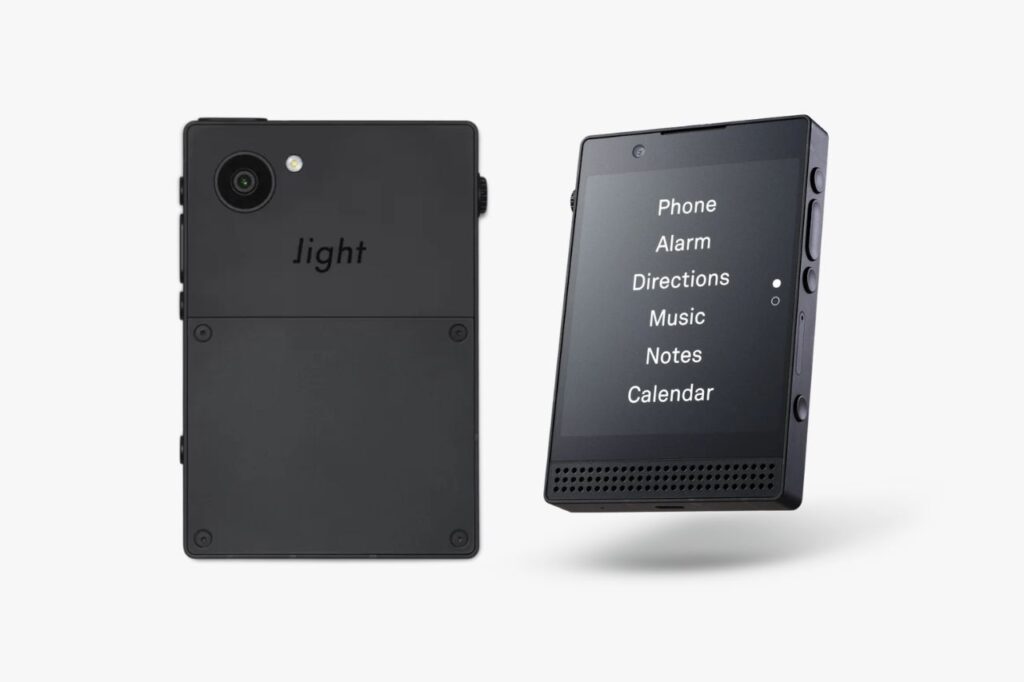
Light Phone III
Category: Premium Minimalist
The Light Phone III builds on the reputation of the Light Phone II with a refined e-ink display, a cleaner interface, and a small set of intentional tools. There is no browser, no app store, and no social media.
Key specs: e-ink touchscreen, 4G LTE with VoLTE, USB-C charging, alarm, calculator, directions tool, multi-day battery life.
Pros:
- Beautiful, calm design that feels premium in hand
- Carefully curated offline tools without internet temptation
- Strong community support and regular firmware updates
Cons:
- Higher price point, typically around $350 to $400
- Texting on e-ink can feel slow compared to a traditional screen
- No camera, which may be a dealbreaker for some
Ideal user: Adults who want the most polished, intentional break from smartphone life and are willing to pay for quality.
Available at the Light Phone website and select online retailers.
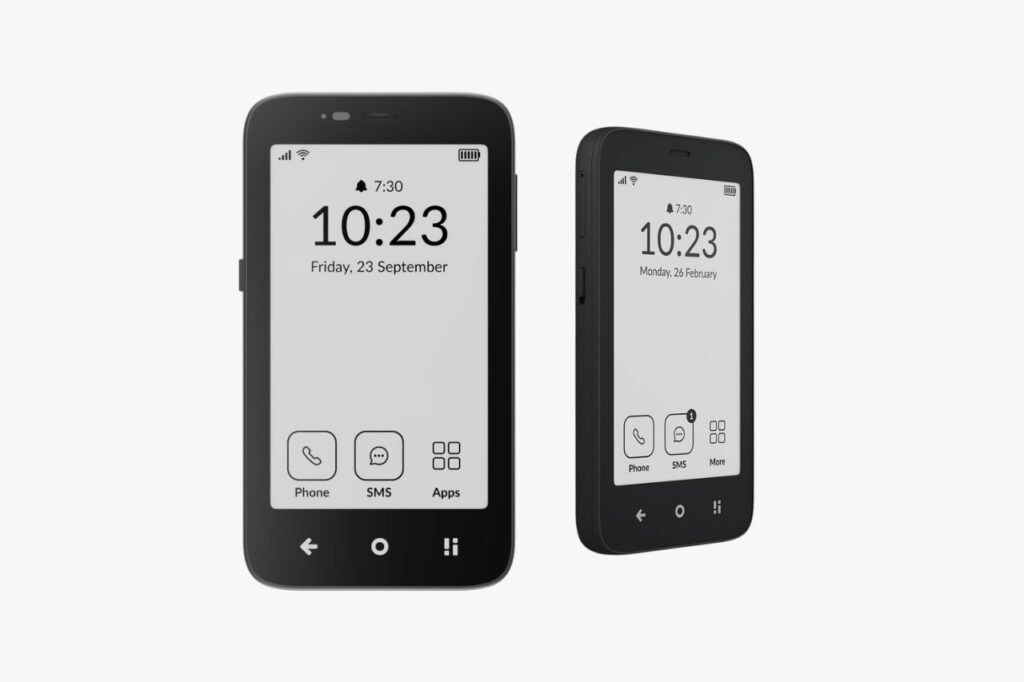
Mudita Kompakt
Category: Premium Minimalist
The Mudita Kompakt is built around privacy first. Its standout feature is a physical Offline+ switch that instantly cuts connectivity, no menus or software toggles required. It runs a de-Googled operating system.
Key specs: e-ink display, 4G LTE, physical Offline+ switch, USB-C, sideloading capability for approved apps, multi-day battery.
Pros:
- Hardware-level disconnect switch is satisfying and trustworthy
- De-Googled OS means no background data harvesting
- Sideloading lets you add select tools without opening the floodgates
Cons:
- Niche product with limited availability outside direct purchase
- Learning curve for sideloading approved apps
- Premium pricing, typically around $350 to $400
Ideal user: Privacy-focused users who want hard, physical control over their connectivity and zero data tracking.
Available at the Mudita website.
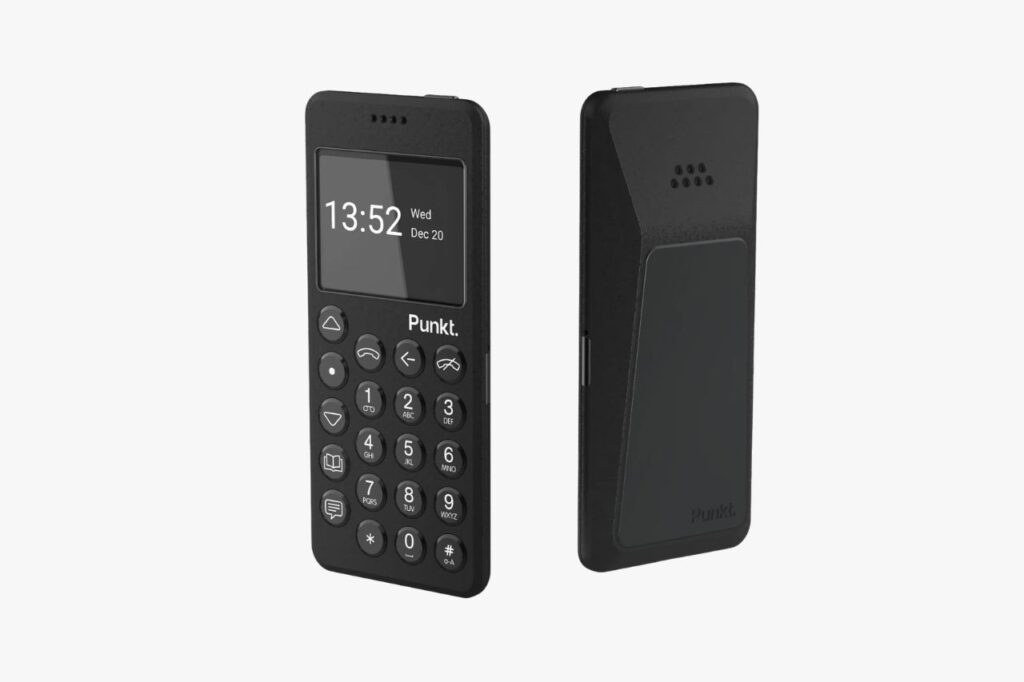
Punkt MP02
Category: Premium Minimalist
The Punkt MP02 is the most design-forward phone on this list. Its compact, calculator-like body and tactile buttons make it feel deliberate and precise. It handles calls and texts with no browser in sight.
Key specs: 4G LTE, 2-inch color display, physical keypad, USB-C, Bluetooth tethering option, long battery life.
Pros:
- Striking industrial design that feels premium without being flashy
- Solid call quality and reliable texting
- Bluetooth tethering lets you use it as a hotspot from a secondary device if needed
Cons:
- Small screen can make texting tedious for longer messages
- Price runs around $300 to $350, which is steep for a basic phone
- Limited availability in US retail stores
Ideal user: Design-conscious minimalists who value form as much as function and want a true conversation piece.
Available at the Punkt website and select design retailers.
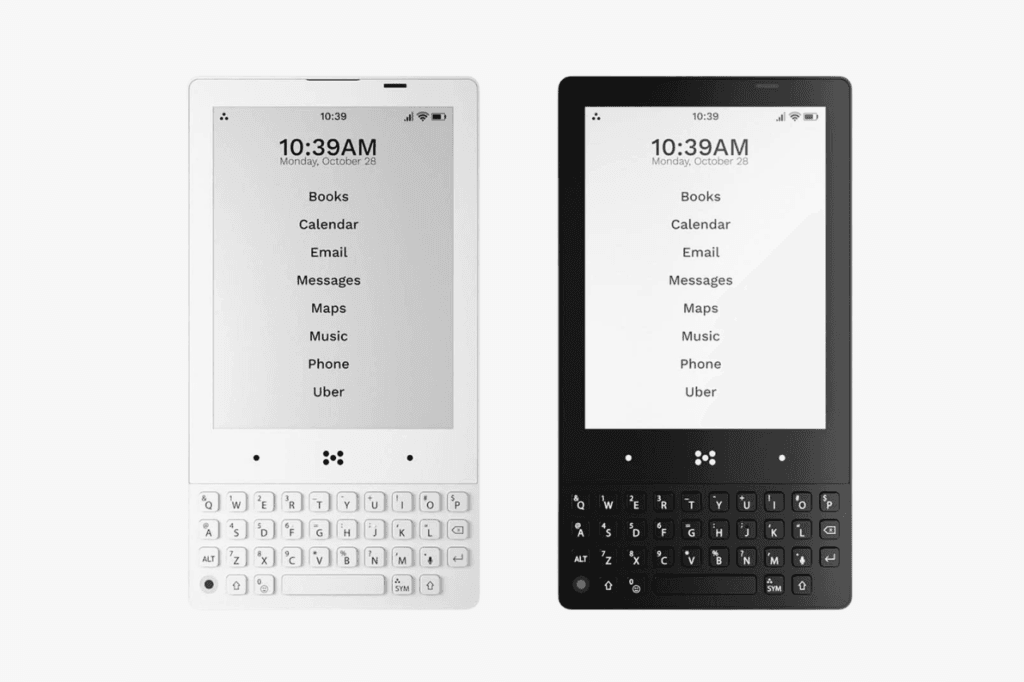
Minimal Phone (by Minimal Company)
Category: Modern E-Ink
The Minimal Phone stands out with a full QWERTY e-ink keyboard and a focus on text-based productivity. It occupies a unique space between a feature phone and a stripped-down smartphone, offering basic tools without a traditional browser experience.
Key specs: e-ink display with physical QWERTY keyboard, 4G LTE, customizable launcher, calendar, notes, and calculator, multi-day battery.
Pros:
- Physical keyboard makes texting fast and satisfying
- E-ink screen is easy on the eyes and great in sunlight
- Customizable enough to fit different workflows without adding internet distractions
Cons:
- Newer to the market, so long-term reliability is still being tested by the community
- Slightly larger form factor than a typical dumb phone
- Pricing around $350 to $400
Ideal user: Writers, note-takers, and professionals who want a keyboard-driven device that keeps the internet at arm’s length.
Available at the Minimal Company website.
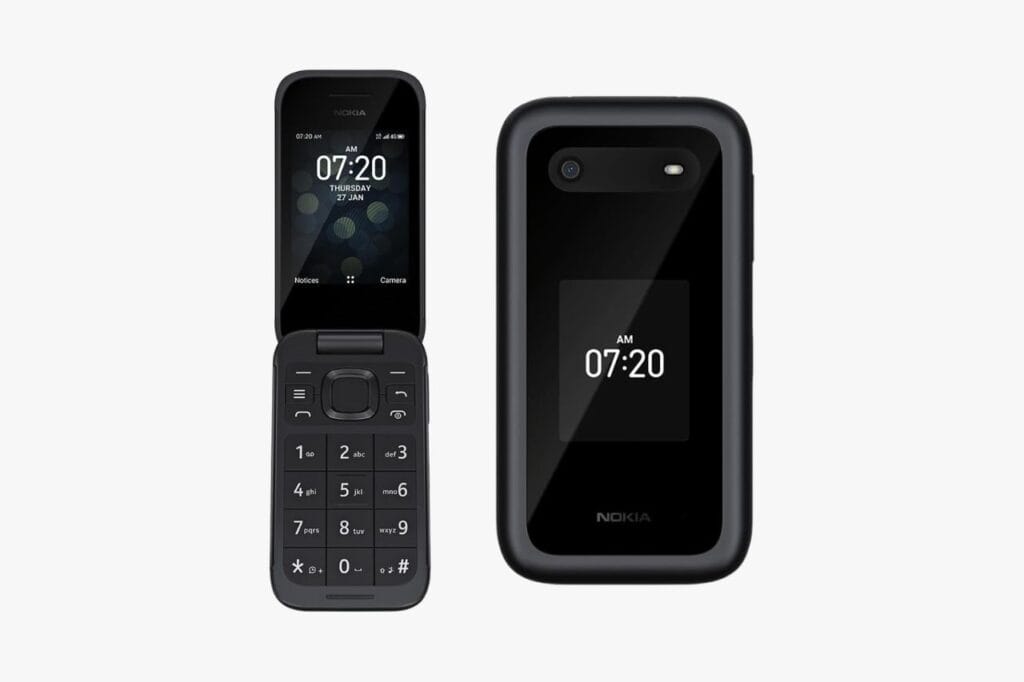
Nokia 2780 Flip
Category: Classic Flip
The Nokia 2780 Flip is a familiar, affordable option that runs KaiOS. It does include a basic browser, so it is not a true no-internet phone out of the box. You can disable data in your carrier settings to effectively block web access.
Key specs: 4G LTE with VoLTE, 2.7-inch main display, KaiOS, 2MP camera, FM radio, Bluetooth, microSD support, removable battery.
Pros:
- Very affordable, typically around $60 to $90
- Widely available through US carriers including T-Mobile and AT&T
- Removable battery and microSD slot for music storage
Cons:
- KaiOS includes a browser and basic apps, so it is not internet-free by default
- Camera quality is very basic
- Build quality is decent but not rugged
Ideal user: Budget-conscious buyers who want a classic flip phone feel and are comfortable disabling data to block internet access.
Available at major US carriers and Amazon.
Kyocera DuraXV Extreme+
Category: Rugged
The Kyocera DuraXV Extreme+ is a mil-spec rugged flip phone built for harsh environments. It handles drops, water, dust, and extreme temperatures. It is a strong pick if your work takes you outdoors.
Key specs: 4G LTE with VoLTE, MIL-STD-810H and IP68 rated, 2.6-inch main display, 5MP camera, GPS, programmable key, push-to-talk ready.
Pros:
- Extremely tough build that survives job sites, rain, and drops onto concrete
- GPS and push-to-talk features useful for field workers
- Loud, clear audio even in noisy environments
Cons:
- Typically carrier-locked to Verizon, which limits flexibility
- Not a true no-internet phone; data can be disabled but a browser exists
- Bulkier than most flip phones
Ideal user: Outdoor workers, contractors, and anyone who needs a phone that can survive rough conditions without internet distractions.
Available through Verizon.
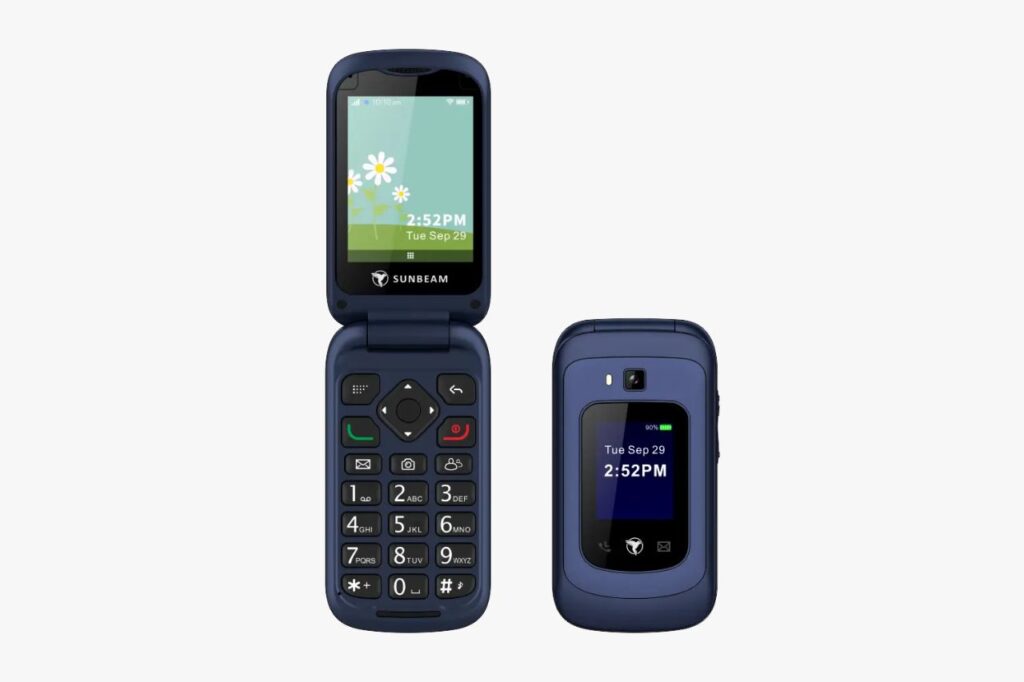
Sunbeam F1 Horizon
Category: Family/Customizable
The Sunbeam F1 Horizon is a true no-internet flip phone with no browser, no app store, and no social media. Its standout feature is voice-to-text, which makes texting much faster than a traditional keypad.
Key specs: 4G LTE with VoLTE, flip design, voice-to-text, GPS for offline directions, camera, Bluetooth, long battery life.
Pros:
- Voice-to-text makes daily texting practical and quick
- Completely browser-free and app-store-free out of the box
- GPS directions available without a full internet connection
Cons:
- Smaller brand, so parts and support may be less accessible than Nokia or Kyocera
- Camera quality is basic
- Costs more than budget flip phones, typically around $200 to $250
Ideal user: Families, parents buying for teens, and daily texters who want zero internet access with better-than-basic communication features.
Available at the Sunbeam Wireless website.
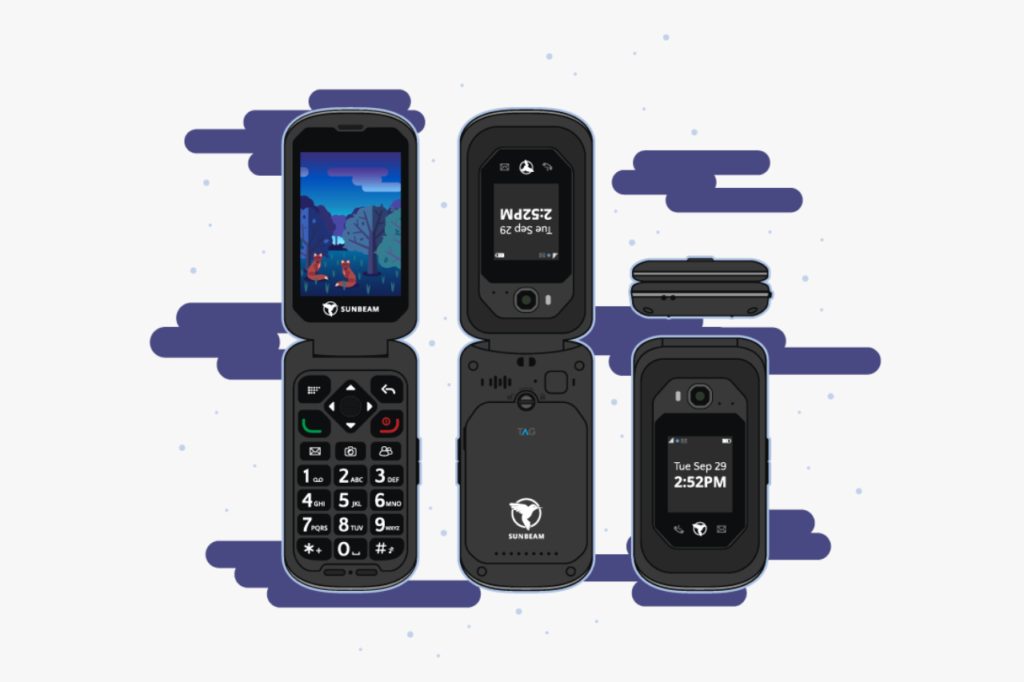
Sunbeam F1 Pro
Category: Family/Customizable
The Sunbeam F1 Pro shares the same no-internet philosophy as the F1 Horizon but adds a few extras for users who want slightly more capability. It still has no browser and no app store.
Key specs: 4G LTE with VoLTE, flip design, voice-to-text, hotspot capability, GPS, camera, Bluetooth, group messaging support.
Pros:
- Hotspot capability lets you share a data connection with another device when needed
- All the same no-internet protections as the F1 Horizon
- Group messaging works reliably
Cons:
- Hotspot feature may feel contradictory if your goal is total disconnection
- Similar price range to the Horizon, around $200 to $250
- Limited color and style options
Ideal user: Users who want a no-internet daily phone but occasionally need the flexibility to tether a laptop or tablet for specific tasks.
Available at the Sunbeam Wireless website.
CAT S22 Flip
Category: Rugged
The CAT S22 Flip is a rugged flip phone that runs Android 11 Go Edition. Because it runs Android, it technically has internet capability, but you can lock it down by disabling data, removing the browser, and using app blockers.
Key specs: 4G LTE, Android 11 Go, 2.8-inch touchscreen, IP68 and MIL-STD-810H rated, 5MP camera, GPS, programmable key.
Pros:
- Very tough build with water, dust, and drop resistance
- Android gives access to select apps if you want them, or you can strip it down
- Touchscreen and physical keypad combo offers flexibility
Cons:
- Not a true no-internet phone; requires manual lockdown to remove web access
- Android Go can feel sluggish on limited hardware
- Heavier and bulkier than non-rugged options
Ideal user: Outdoor professionals who want ruggedness and the option to customize their level of connectivity through Android restrictions.
Available through T-Mobile, Amazon, and select retailers.
Alcatel Go Flip 4
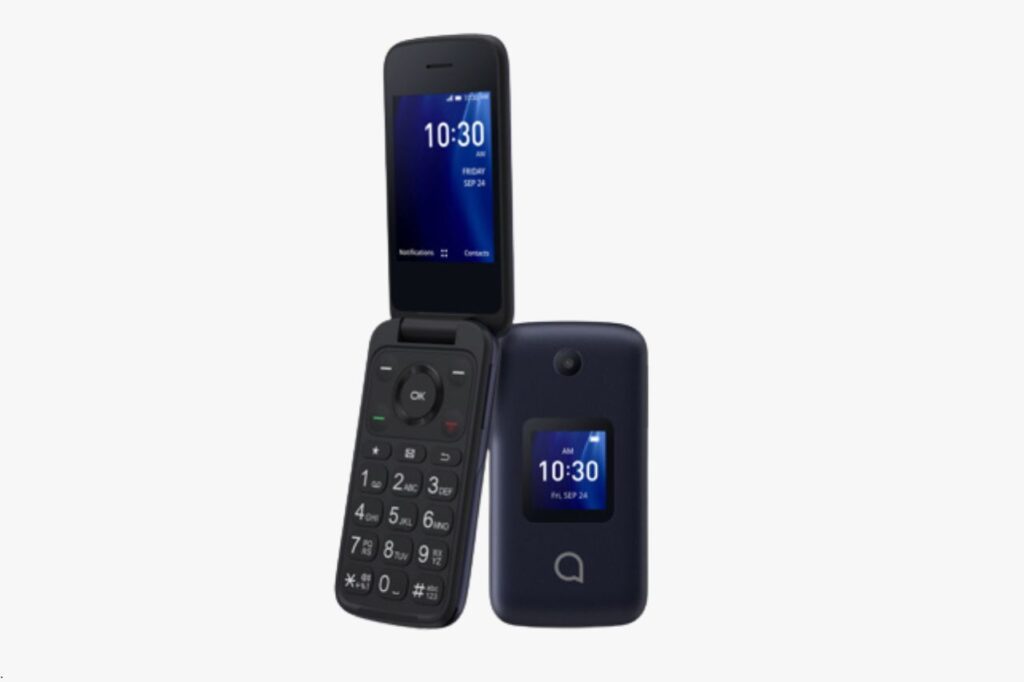
Category: Classic Flip
The Alcatel Go Flip 4 is one of the most affordable 4G flip phones widely available in the US. It runs KaiOS and includes basic apps like a browser, which means it needs data to be disabled for a true no-internet setup.
Key specs: 4G LTE with VoLTE, KaiOS, 2.8-inch main display, 2MP camera, FM radio, Bluetooth, hearing aid compatible.
Pros:
- Very budget-friendly, typically around $50 to $80
- Hearing aid compatible (HAC M4/T3), making it a solid choice for older users
- Compact and lightweight
Cons:
- KaiOS includes a browser and basic web apps
- Camera quality is minimal
- Build quality is basic and not designed for rough use
Ideal user: Seniors, budget-conscious buyers, and anyone who wants a simple, affordable flip phone and is willing to disable data for a no-internet experience.
Available through T-Mobile, AT&T, and Amazon.
Alternatives: Semi-Minimalist Setups
Not everyone is ready to give up their smartphone entirely. If you want to reduce screen time without switching devices, a few practical strategies can help you get closer to a dumb phone experience while keeping your current phone.
Grayscale mode combined with app blockers is the easiest starting point. Switching your smartphone display to black and white makes social media, games, and videos far less appealing. Pair that with an app blocker or a minimalist launcher for Android, and you can strip your home screen down to just calls, texts, and a handful of tools. This approach works well as a trial run before committing to a dedicated device.
Using a smartwatch as a companion device is another option. Watches like the Apple Watch or Pixel Watch let you make calls, receive texts, and check directions from your wrist. You can leave your smartphone at home or in a drawer during the hours you want to disconnect, while still staying reachable for emergencies.
A dual-phone strategy is popular among professionals and parents. You carry a smartphone for work tasks during business hours, then switch to a no-internet dumb phone for evenings, weekends, and personal time. This keeps your work tools accessible without letting them bleed into your rest and relationships. The key is committing to leaving the smartphone behind when you switch over.
Frequently Asked Questions
Can I still use GPS without internet?
Some phones on this list, like the Sunbeam F1 Horizon and Sunbeam F1 Pro, include basic GPS or offline directions. Most true no-internet phones do not offer full turn-by-turn navigation like Google Maps. If GPS is essential, look for models that specifically list offline mapping or carry a separate GPS device.
Do these phones support WhatsApp or iMessage?
No. True no-internet phones cannot run WhatsApp, iMessage, Signal, or other messaging apps because those require a data connection and app installation. KaiOS phones like the Nokia 2780 Flip and Alcatel Go Flip 4 can support a limited version of WhatsApp, but only when data is enabled, which defeats the no-internet purpose.
Are they compatible with US and EU carriers in 2026?
Most of the phones listed here support 4G LTE and VoLTE, which means they work on major US carriers like T-Mobile, AT&T, and Verizon. Always check the specific band support for your carrier before buying. For EU use, unlocked models with compatible LTE bands will generally work, but carrier-locked US phones may not.
Can I use them as a secondary phone?
Absolutely. Many people carry a no-internet phone as their personal device alongside a smartphone they use only for work. This dual-phone approach lets you stay reachable without having social media and email follow you everywhere.
Will 4G phones still work as networks upgrade to 5G?
Yes. US carriers are expected to maintain 4G LTE networks well into the 2030s. Buying a 4G phone today is safe for several years of use. Some newer minimalist phones are beginning to include 5G support, but 4G remains fully functional and widely covered across the country.