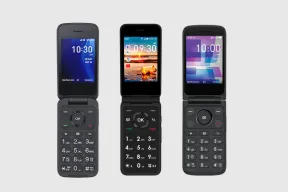
The Best Phones That Only Call and Text in 2026
By Finn Albar
Phones that only call and text still exist, and the strictest one here is the AGM M8 Flip Security+. AGM disables its camera, Bluetooth, mobile data, and picture messages. Every other phone below keeps a few extras, such as a torch or a camera, and each entry names them.
They suit someone who wants a hard boundary, a parent buying a first phone, or an adult buying for a parent. None shows a browser or app store in its maker’s pages or guide, and each runs on 4G or 5G. We name a US carrier only where the maker does, so otherwise check yours before you buy.
If you also want maps or a hotspot, see phones without internet access. If you only want fewer apps on the phone you own, a minimalist launcher or an app blocker is a lighter first step.
| Phone | Form factor | Input | Network | Wi-Fi | Battery | Screen | GPS | Hotspot | |
|---|---|---|---|---|---|---|---|---|---|
| AGM M8 Flip Security+ | Flip | Keypad | 4G | No | 1,500 mAh | 2.8 in | No | No | No |
| AGM M8 Flip | Flip | Keypad | 4G | No | 1,500 mAh | 2.8 in | No | No | No |
| AGM M10 | Flip | Keypad | 4G | No | 1,200 mAh | 2.4 in | No | No | No |
| AGM M9 | Bar | Keypad | 4G | No | 1,000 mAh | 2.4 in | No | No | No |
| Lively Jitterbug Flip3 | Flip | Keypad | 5G | Yes | 3,000 mAh | 3.2 in | No | No | No |
How we picked
A phone earns a place here only when all four are true:
- No browser and no app store appear in the maker’s pages, FAQ, or guide. Where the maker puts that promise in writing, the entry flags it.
- It runs on 4G or 5G. A 3G-only phone cannot make calls on a US network, so none is here.
- It is a current model: the maker still offers it, and the US picks have a live store page.
- A US carrier is named only when the maker names it. Otherwise the entry tells you to check your carrier.
Several basic-looking phones are out because they have a browser. The AT&T version of the Sonim XP3plus 5G has one, and so does the Kyocera DuraXV Extreme+ on Verizon. The Journey Pro lets you browse the internet, and AGM’s M11 offers direct access to TikTok and YouTube.
Two HMD phones carry a Cloud Apps portal for news, weather, and videos. They are the Nokia 3210 4G (outside Europe and China) and the Nokia 215 4G (2024), so both are out.
The order runs from the strictest phone to the most capable. The last entry is for readers outside the US.
The best phones that only call and text
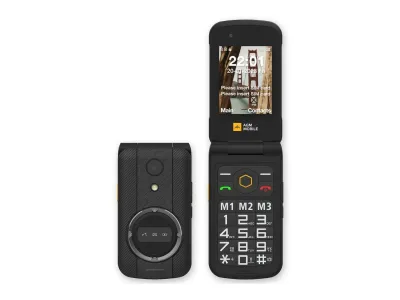
1. AGM M8 Flip Security+: the strictest call-and-text phone
AGM
M8 Flip Security+
Available$99
- Network
- 4G
- Wi-Fi
- No
- Battery
- 1,500 mAh
- Screen
- 2.8 in
4G · Water resistant · Headphone jack · Keypad · Rugged · SOS button · Hearing aid
The AGM M8 Flip Security+ is the strictest phone here, because its maker switches off nearly everything. Bluetooth, cellular data, MMS, the camera, USB data transfer, microSD expansion, and multimedia all ship disabled. It also has no internet browser, and apps cannot be installed.
It suits a workplace that bans cameras, a child’s first phone, and anyone who wants a boundary with no exceptions. What remains is calls, plain text messages, a torch, and an SOS key that dials 911 by default in the Americas. The body is rugged, and it works with hearing aids.
The limits are the point: no photos, no picture messages, and no way to add either later. The one carrier on record is Tello, which uses T-Mobile’s network. Also, 4G calling works only in some areas and with some SIM cards, so ask your carrier about VoLTE.
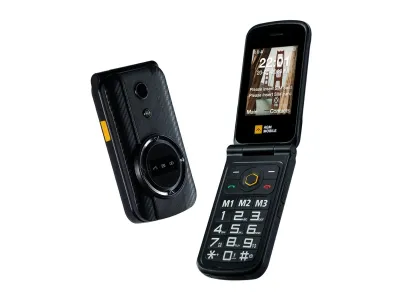
2. AGM M8 Flip: the same phone with a camera
AGM
M8 Flip
Available$99
- Network
- 4G
- Wi-Fi
- No
- Battery
- 1,500 mAh
- Screen
- 2.8 in
4G · Camera · Water resistant · Headphone jack · FM radio · Keypad · Rugged
The AGM M8 Flip is the Security+ with the restrictions lifted, and it keeps the same simple system. It has no internet browser, and apps cannot be installed, a promise AGM puts in writing. What the Security+ switches off comes back here: a camera, a memory card slot, and picture messages.
It suits a parent or grandparent who wants big keys, a loud speaker, and the odd photo. It also has quick-dial keys, an SOS key, a torch, and a reminder light for missed calls and texts. If you want no camera at all, buy the Security+ instead.
The weakness is the loophole: the camera and picture messages are exactly what the Security+ removes. It carries American 4G bands, but Tello is still the only carrier on record, so check your carrier and VoLTE support. There is no WhatsApp, no maps, and no app store to add them.
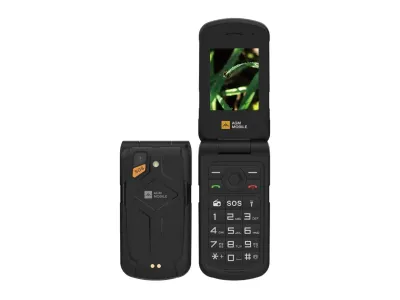
3. AGM M10: the flip with an FM radio
AGM
M10
Available$69
- Network
- 4G
- Wi-Fi
- No
- Battery
- 1,200 mAh
- Screen
- 2.4 in
4G · Camera · Water resistant · Headphone jack · FM radio · Keypad · Rugged
The AGM M10 is a rugged 4G flip with a short feature list. It has quick dial, two SIM slots, a torch, and a headphone jack, plus an FM radio and a camera.
The SOS key dials 911 by default in the Americas, but the external SOS button ships switched off. The radio and torch cover two small jobs without a smartphone.
It suits a backup phone for a bag or a car, and a worker who drops phones. It does not suit anyone who needs a written guarantee of no browser.
Its guide shows no browser or app store, but unlike the M8 Flip, AGM makes no written promise that there is none. The camera and radio stay, and there is no WhatsApp or maps.
Neither its bands nor a carrier is published. VoLTE works only in some areas and with some SIM cards, so check your carrier first.
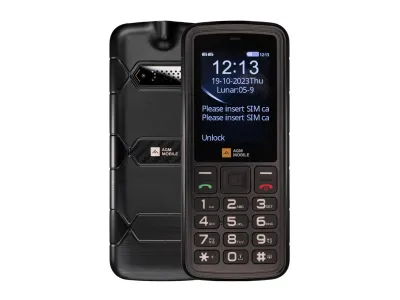
4. AGM M9: the cheapest AGM, in a bar
AGM
M9
Available$49
- Network
- 4G
- Wi-Fi
- No
- Battery
- 1,000 mAh
- Screen
- 2.4 in
4G · Camera · Water resistant · Headphone jack · FM radio · Keypad · Rugged
The AGM M9 is a rugged bar phone, and AGM sells a US T-Mobile version of it. It has a simple system, large fonts, fast dial, an FM radio, a torch, and two SIM slots. You also get a camera, text and picture messaging, and 4G calling over VoLTE where the carrier supports it.
It suits a glovebox phone, a festival phone, and a first phone for a child who only needs to reach you. Of the AGM phones here, it costs the least. Anyone who needs a written guarantee of no browser should look elsewhere, because AGM makes that claim only for the two M8 phones.
The M9 has more connections than the Security+, including Bluetooth and a memory card slot. Its guide shows no browser or app store, but AGM puts no such promise in writing. If your carrier is not T-Mobile, ask it about the exact model before you order.
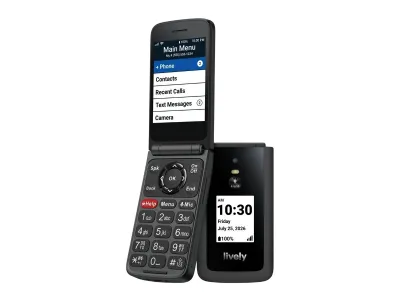
5. Jitterbug Flip3: the simplest phone for a parent
Lively
Jitterbug Flip3
Available$80
- Network
- 5G
- Wi-Fi
- Yes
- Battery
- 3,000 mAh
- Screen
- 3.2 in
5G · Wi-Fi · Camera · Headphone jack · Keypad · SOS button · Hearing aid
Lively’s Jitterbug Flip3 is a 5G flip whose menu stops at a short list. Its main menu holds Phone, Contacts, Recent Calls, Text Messages, Camera, and Gallery. Weather and a few tools sit one step down, and the user guide shows no browser or app store.
It suits a parent or grandparent who wants big keys, loud audio, and one button for help. An adult child can set it up once and leave it alone. It is looser than the Security+, because it keeps a camera, Bluetooth, Wi-Fi calling, and a flashlight.
The plan is the catch. The phone requires a Lively plan at activation, so you cannot bring your carrier. Without that service, the Urgent Response button stops working, and you dial 911 instead.
6. HMD 105 4G School Edition: best outside the US
The HMD 105 4G School Edition is the plainest about what it leaves out. It has no web browser, no preloaded games, and no voice recorder, and HMD puts that in writing. A parental-controls PIN can also block Bluetooth, MMS, and the FM radio.
What remains is calls, a one-touch SMS key, an FM radio, a dual flashlight, and an MP3 player that needs a memory card. It suits a student, or anyone outside the US who wants an HMD 4G phone with a written no-browser promise. It does not suit a US carrier, because it carries European bands only.
The standard HMD 105 4G drops the school limits. Its product page leaves the browser question open, though an HMD blog post rules one out. The School Edition is on HMD’s site but has no price or buy link yet, so check with HMD or a local retailer.
How to choose between them
Settle these five things before you compare prices.
- How strict you want to be. Only the Security+ drops the camera, Bluetooth, mobile data, and picture messages. Every other US phone here keeps a camera, and several keep a radio, Bluetooth, or a memory card slot.
- Whether the maker promises no browser. AGM promises it for the two M8 phones, and HMD for the School Edition. For the M10, the M9, and the Jitterbug Flip3, the guide shows no browser, but the maker makes no promise.
- Your carrier. A 4G label does not guarantee activation, so ask your carrier about the exact model and about VoLTE. AGM sells a T-Mobile version of the M9 and points M8 buyers to Tello, and Lively sells its own plan with the Flip3.
- Picture messages. The Security+ cannot send or receive them. The other phones support MMS, but on the AGM phones it depends on your carrier’s settings.
- Who it is for. A child or a bag-and-glovebox phone points to an AGM. A parent who may need help points to the Jitterbug. Someone outside the US points to the HMD.
Who should not buy a call-and-text phone
You will give up WhatsApp, maps, banking apps, and authenticator apps. One-time codes that arrive as plain texts still work, but codes that need an app do not. 2FA without a smartphone covers the keys and code tokens that replace the app.
If you want maps, a hotspot, or a camera worth using, look at phones without internet access. If you need WhatsApp, the best dumbphones list covers the Wisephone II, the one on that list that supports it.
For more than calls and texts but still no browser, read our Keyphone Hybrid review. It has a swappable keyboard and camera, plus music, notes, and a calendar. The Hybrid still has no maps on the phone, no WhatsApp, and no hotspot.
For a cheaper step, cheap flip phones adds a KaiOS browser and, on some models, Google Maps. If the problem is the apps on your current phone, start with a minimalist launcher.
Common questions
Is there a phone that only texts and calls?
Yes, and the strictest one here is the AGM M8 Flip Security+. AGM disables its camera, Bluetooth, cellular data, and picture messages, and it has no browser and no way to install apps. Every other phone here adds at least a camera or a radio.
What is the best talk and text only phone?
For the strictest limits, the AGM M8 Flip Security+. For a parent, the Jitterbug Flip3 adds big keys and a help button on a Lively plan. To compare the rest by network and carrier, use the Dumbphone Finder.
Which call and text only phone is cheapest?
Among the US phones here, the AGM M9 costs the least. The Jitterbug Flip3 needs a Lively plan on top of the phone, so count the monthly bill.
Do phones that only call and text still work in 2026?
Yes, if they run on 4G or 5G. US carriers have shut down their 3G networks, so a 3G-only phone cannot make calls. Ask your carrier to confirm VoLTE for the exact model, because even on AGM’s phones, 4G calling works only in some areas and with some SIM cards.
Is there a text only phone for a child?
The AGM M8 Flip Security+ is the closest, with no camera, no mobile data, and no browser. No GPS appears in its specs, so for location sharing and parent controls see safe phones for kids. For more keypad options, see dumbphones for kids.
Which US carriers will activate these phones?
The makers name few. AGM sells a T-Mobile version of the M9, and the M8 works with Tello, which uses T-Mobile’s network. Lively sells the Jitterbug Flip3 only with its own plan, so for any other pairing, check your carrier.
How strict a phone to buy
Choose the AGM M8 Flip Security+ if you want a phone that only calls and texts, and the AGM M8 Flip if you also want a camera. Choose the Jitterbug Flip3 for a parent who may need help.
The AGM M10 and M9 are the low-cost backups, with the caveat that AGM never promises in writing that they have no browser. Outside the US, the HMD 105 4G School Edition is the one HMD 4G phone with a written no-browser promise.
If you are not sure you need a phone this plain, try a minimalist launcher first. If you want maps without a browser, move up to phones without internet access.