Light Flip vs Light Phone 3: Keypad or Touchscreen?
By Finn Albar
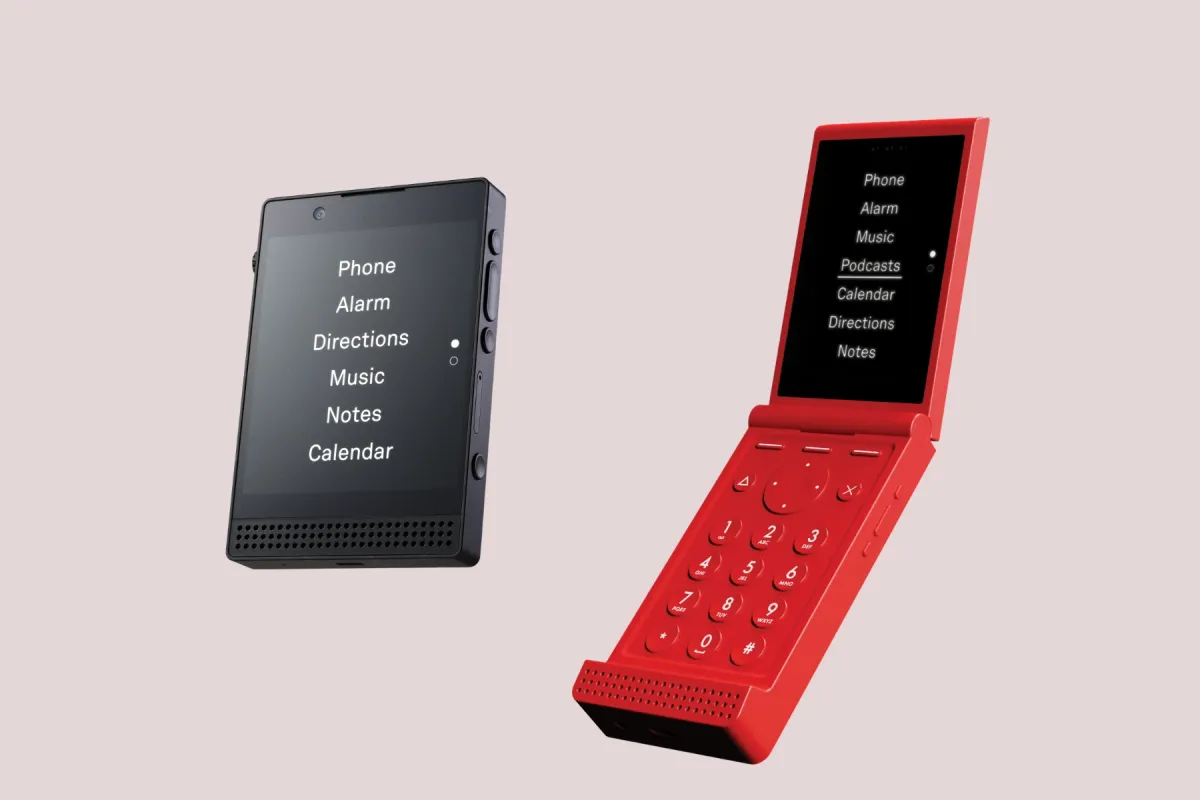
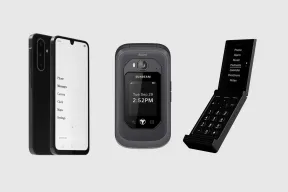
Pick the Light Flip if you mostly call and want a T9 keypad, and the Light Phone III if you text a lot or take photos. Both phones get the same tools. The Flip costs less and keeps a headphone jack, but it has not shipped yet.
Neither phone has WhatsApp, a browser, or Spotify, so both suit someone ready to trade a smartphone for calls, texts, and a few tools. If fewer apps on the phone you own is enough, a minimalist launcher is the lighter step.
| Light Flip | Light Phone III | |
|---|---|---|
| Form factor | Flip | Touchscreen |
| Input | Keypad | Touchscreen |
| Network | 5G | 5G |
| Wi-Fi | Yes | Yes |
| Battery | 1,800 mAh | 1,800 mAh |
| Screen | 2.8 in | 3.92 in |
| GPS | Yes | Yes |
| Hotspot | Yes | Yes |
| No | No |
Keypad or touchscreen
The Light Flip is a clamshell with a keypad. You type with predictive T9, and it also has voice-to-text and audio messages. The Flip adds nine speed dials and “a form factor that prioritizes calling.”
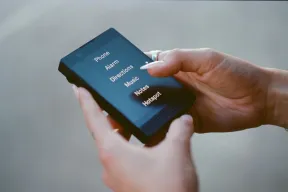
On the Light Phone III, you type on glass instead. The wider display aims to be “optimal for texting,” and the keyboard offers QWERTY, QWERTZ, and AZERTY layouts. LightOS updates in 2026 added swipe gestures, such as a swipe from the left edge to go back.
Both phones run their interface and keyboard in English only, though they still show incoming messages in other languages. Voice-to-text also needs cell data.
The Flip has a single matte OLED at 480 by 640 pixels, with no second screen. The Phone III has a larger AMOLED behind matte glass at 1080 by 1240, with a black-and-white interface.
Winner: the Light Phone III for texting, and the Light Flip for calling. We would pick the Phone III if your texts run longer than a line, because T9 guesses each word from keys that share letters.
LightOS tools on each phone
The tool list is the same for both phones, word for word. It covers an alarm, timer, calculator, calendar, directory, notes, voice memos, music, and podcasts. It also includes Directions, Hotspot, Weather, Rideshare for Lyft and Uber, and an Authenticator for two-factor codes.
What Light will never add matches too: neither phone will have social media, browsing, email, news, or ads.
The match on paper has two gaps today. Rideshare works only on the Light Phone III for now. Light’s developer program is also limited to Phone III development “at least for now.”
That program feeds the community Tool Library, which is due to go live in November. Light has not yet shown how tools such as Directions work on the Flip’s keypad. If you need turn-by-turn directions now, dumbphones with GPS compares the phones that give them.
Winner: the Light Phone III, because its tools run today. For the Flip, the same tools are a promise until the phone ships.
Camera
Both phones produce a 12 MP image from a 50 MP rear sensor, so the main camera starts from the same spec. The difference is everything around it.
The Light Phone III adds an 8 MP front camera and a two-step shutter button that focuses on a half press. It has photo, video, and selfie modes, with center focus at a fixed focal length near a 28 mm equivalent.
Photos come out in color, even though the interface is black and white. You can send them by text, or copy them to a computer over USB-C from the Album tool.
For the Light Flip, the only description so far is “an intentionally simple phone with a camera,” plus a flashlight. Nothing published mentions a front camera, camera modes, or an album tool.
Winner: the Light Phone III. If you take photos to share, the Flip’s camera stays an open question until more details arrive.
Battery and charging
Both phones have the same battery capacity, and Light’s estimates are close. Light expects about a day and a half from the Light Flip.
For the Light Phone III, the estimate is “a full day of normal usage, and hopefully much more,” or one to three days per charge. Directions, the hotspot, long calls, and weak signal drain it faster.
The Flip’s battery is user-replaceable, so you can fit a new one when the old one fades. The Phone III has what Light calls an accessible battery, and Light expects to offer battery replacements both to buy and as a service.
Both phones charge over USB-C. The Phone III comes with a USB-C cable and a SIM pin, but no wall adapter.
Winner: close on paper, with the Light Flip ahead for a battery you can swap yourself. Plan on charging either one every night or two.
Calls, music, and headphones
The Light Flip has a 3.5 mm headphone jack next to its USB-C port, so wired headphones plug straight in. The Light Phone III has no jack. Instead, its USB-C port works with wired headphones, and a September 2026 update fixed low volume through USB-C to 3.5 mm adapters.
Both have Bluetooth 5.0, two stereo speakers, and two microphones with noise cancellation. The Flip leans into calls, and Light even pitches “the distinct satisfaction of hanging up.”
Music on both comes from your own files. The Music tool is a one-playlist player that you fill by uploading audio through Light’s dashboard, with a 20 GB limit on the Phone III. Neither phone has a streaming tool for Spotify today.
Winner: the Light Flip, for the jack and a body built around calls.
Size, weight, and build
Closed, the Light Flip measures 110 by 58 by 19 mm and weighs 160 g. The Light Phone III is a flat slab at 106 by 71.5 by 12 mm and 124 g. So the Flip is narrower in a pocket, but thicker and heavier.
The Flip has a plastic body in six colors, with a loop for charm bracelets. The Phone III comes only in black, with a body of aluminum, glass, and SORPLAS recycled plastic. A clickable wheel sets its screen brightness, and a click turns on the flashlight.
Light rates both phones IP54, which covers limited dust and water splashes from any direction. So neither is waterproof.
Winner: neither, because this is a pocket choice. Pick the Flip for a narrow phone that closes, and the Phone III for a thin one.
Repairs, returns, and warranty
Light designed the Light Flip “with repairability in mind,” and the battery is user-replaceable. For the Light Phone III, Light claims the phone is easier to repair than earlier models, starting with the screen and USB port.
By October 2025, Light’s studio had already repaired a Phone III screen, wheel, buttons, battery, camera, and back glass for customers. That is a track record the Flip cannot have until it ships.
The same return policy covers both phones. Light refunds an order that has not shipped, or a phone sent back still in its shrink wrap. After you open the box, Light takes returns only for manufacturer defects.
The defect window is one year, but the policy counts it from your order date in one line and from delivery in another. With a reservation that runs for months, ask Light which date applies before you order.
If Light cuts the price while your reservation is open, you can ask for the difference within 14 days of the change. Light also offers optional insurance through Akko, the Light Protect Plan, for $9.99 a month.
Winner: the Light Flip, for a battery you can swap at home. Otherwise the terms match, and both reward deciding before you break the seal.
Carriers, 5G, and eSIM
Both phones support 5G and 4G LTE on the same band list, with a nano SIM and an eSIM. They also work with the same US carriers: Light’s own service, AT&T, T-Mobile, Noble Mobile, Mint, and US Mobile on Light Speed, with Verizon marked as certification in progress.
Google Fi, Cricket, Metro by T-Mobile, Consumer Cellular, Straight Talk, and Tracfone are incompatible. Light takes no returns for a carrier missing from its list, so check yours first.
The Light Phone III has two Verizon catches. An active Verizon SIM works, but you cannot yet activate a new Verizon line on the phone. Its eSIM feature is still in beta and does not yet work with Verizon.
For the Light Flip, that carrier support is a plan, not a track record. Light plans to certify the Flip with the FCC, PTCRB, and carriers such as AT&T and Verizon, and that work is still ahead.
Winner: the Light Phone III, because it already has setup steps for AT&T, T-Mobile, and an active Verizon SIM. Outside its bundles, Light sells both phones unlocked and never intentionally locks the device.
Price and Light Service plans
The Light Flip costs well under half as much as the Light Phone III, and Light calls the Flip its most affordable phone.
Light Service is optional and works with either phone. In the US, Light charges $25 a month plus tax for unlimited calls and texts with 1 GB of data. Unlimited data costs $45 a month plus tax, and Light slows it to 3 Mbps after 22 GB.
There is no contract, and Light Service covers only the US and Canada. If you plan to share data with a laptop, price out the unlimited tier. Our roundup of dumbphones with a hotspot covers other options.
Light also sells each phone on a two-year US bundle that includes the service. For the Flip, the bundle costs $39 a month with 1 GB of data, or $69 with unlimited data. The touchscreen model costs $59 or $89 a month on the same two tiers.
A bundle phone is SIM-locked to Light for the full term. Canceling early costs a $99 early termination fee, plus the phone’s retail cost minus a credit for each month you paid. If you cancel a Flip bundle reservation, Light keeps the first month’s payment.
Winner: the Light Flip. It costs far less up front, and each bundle tier runs $20 a month cheaper.
Availability and the wait
Light sells both phones by reservation from its own store. A reservation holds your place in line. The Light Phone III is already shipping, so a new reservation waits for the next available phone, not for production to start.
The Light Flip has not shipped yet. Light’s plan calls for three prototype builds to test the design, durability, and network performance before mass production. The Flip ships in numbered batches, and the order page shows which are still open.
You can cancel an unlocked reservation at any point for a full refund. A Flip bundle reservation is the exception, because Light keeps the first month’s payment.
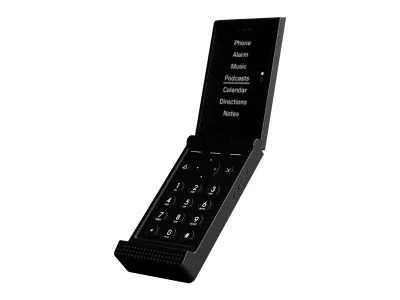
Light
Flip
Preorder$349
- Network
- 5G
- Wi-Fi
- Yes
- Battery
- 1,800 mAh
- Screen
- 2.8 in
5G · Wi-Fi · GPS · Hotspot · Camera · eSIM · Water resistant
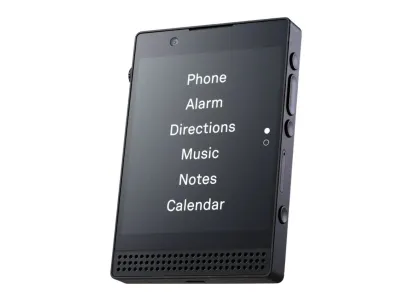
Light
Phone III
Preorder$899
- Network
- 5G
- Wi-Fi
- Yes
- Battery
- 1,800 mAh
- Screen
- 3.92 in
5G · Wi-Fi · GPS · Hotspot · Camera · eSIM · Water resistant
Winner: the Light Phone III, because it is already in buyers’ hands. Reserve the Flip only if you can wait for it to ship.
When to pick a lighter step instead
Both phones leave out WhatsApp, a browser, and email. If your bank, family chat, or employer needs an app, neither is the right step yet. For phones that run it, see dumbphones with WhatsApp.
A minimalist launcher hides apps on the Android phone you already own, and it costs little or nothing. If you only want calls and texts and do not want to wait, a plain flip from the best cheap flip phones does the job for less.
Which one to pick
- You text a lot: the Light Phone III, for a touchscreen keyboard built for texting.
- You mostly call: the Light Flip, for a clamshell, T9, and nine speed dials.
- You take photos to share: the Light Phone III, for the front camera, video, and a shutter button.
- You listen on wired headphones: the Light Flip, for its 3.5 mm jack.
- You need Rideshare or community tools now: the Light Phone III, because Rideshare and Light’s developer program cover only the Phone III for now.
- You want the lowest cost, or a battery you swap yourself: the Light Flip.
- You want the shorter wait: the Light Phone III, because it is already shipping.
Each pick gives up the other phone’s strengths. With the Flip you lose the better camera, Rideshare for now, and an earlier delivery. With the Phone III you pay far more, carry a wider phone, and need USB-C or Bluetooth for headphones.
If you want E Ink rather than OLED, see Light Phone 3 vs Mudita Kompakt.
Common questions
Does the Light Flip have a touchscreen?
No. The Light Flip has no touchscreen in its specs. Instead, you type with predictive T9 on the keypad, or use voice-to-text. If you want to type on glass, the Light Phone III is Light’s touchscreen model.
Does the Light Flip have the same tools as the Light Phone 3?
On paper, yes: both get the same tools, from Directions and Hotspot to Authenticator. In practice, Rideshare works only on the Light Phone III for now. Light’s developer program, which feeds the Tool Library, is also limited to the Phone III at least for now.
Which Light phone has a headphone jack?
The Light Flip has a 3.5 mm jack next to its USB-C port. The Light Phone III has no jack, but its USB-C port works with wired headphones. Both phones also have Bluetooth 5.0.
Do the Light Flip and Light Phone III work on Verizon?
Not fully yet: Verizon certification is still in progress for both phones. An active Verizon SIM works in the Light Phone III, but you cannot yet activate a new Verizon line on it. The Flip still has to go through Light’s carrier certification, so check the carrier list again before it ships.
Final thoughts
The Light Phone III is the better pick today if you text, take photos, or want Rideshare, and it is already shipping. It asks for a much higher price, and it trades the headphone jack for USB-C audio.
The Light Flip is the cheaper, call-first phone with a headphone jack and a battery you can swap. Reserve it only if you can wait, and check your carrier on Light’s compatibility page first, since its certification is still ahead.