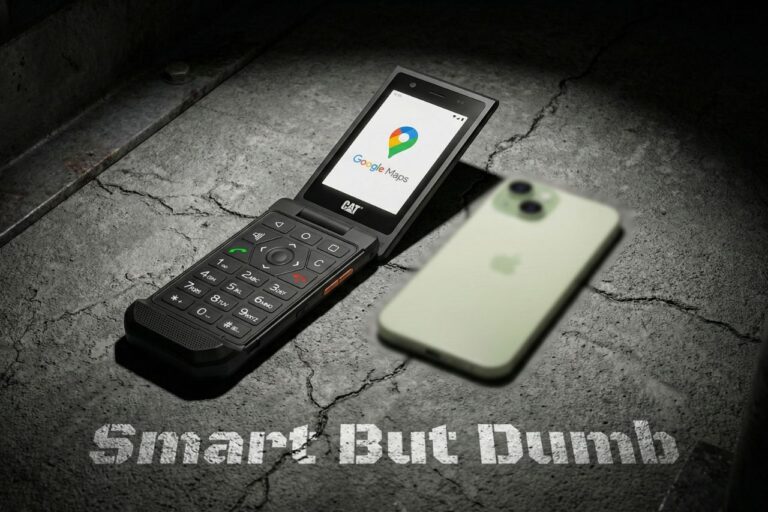
Best Dumbphones for Kids in 2026: How to Delay the Smartphone (Without Losing Your Mind)

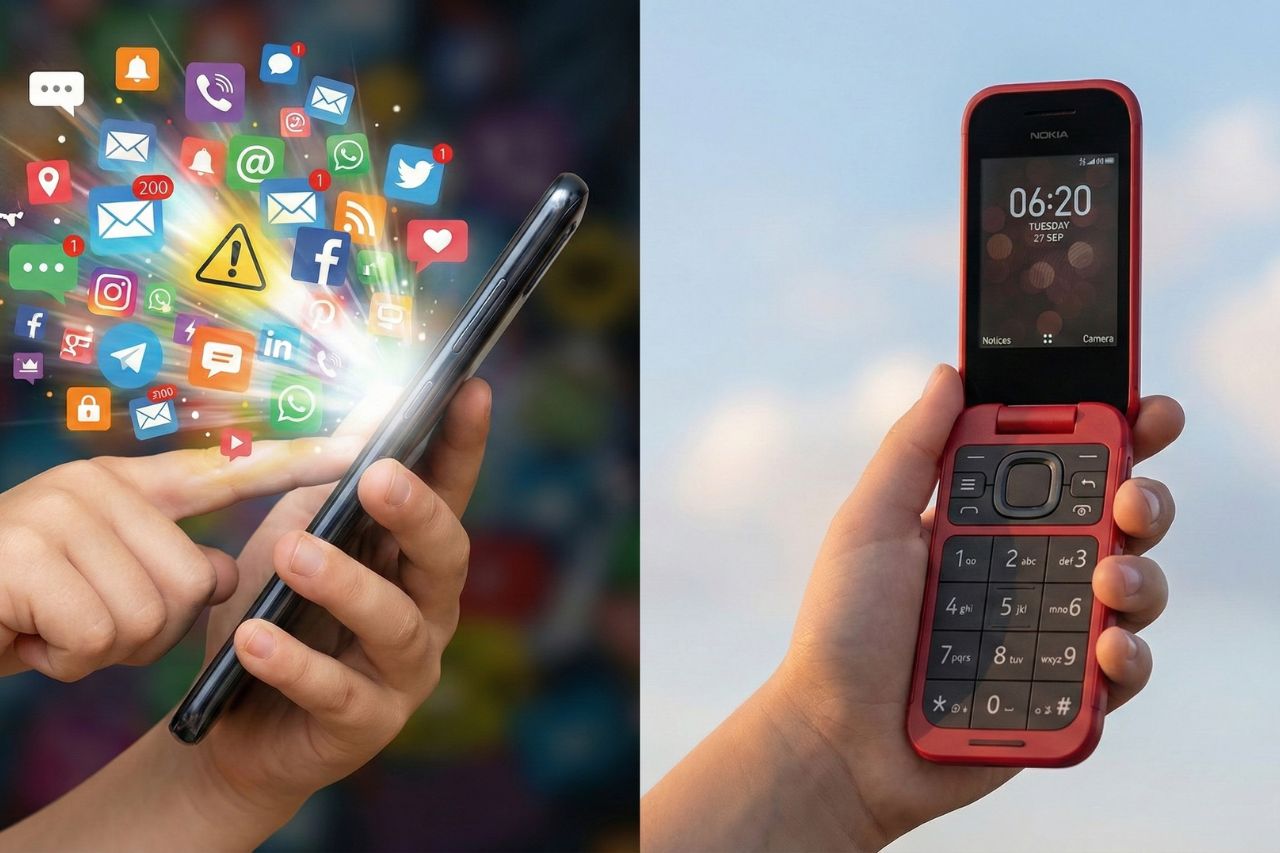
The pressure starts earlier every year.
Used to be, a child got a phone when they started driving (age 16). Then it became high school (age 14). Then middle school (age 11). Now, in 2026, it is not uncommon to see a 7-year-old scrolling TikTok in a restaurant while their parents eat in silence.
As a parent, you are trapped in a dilemma. On one hand, you know the data. You have read Jonathan Haidt’s The Anxious Generation. You know that giving a smartphone to a child is like giving them a Ferrari with no brakes and unlimited cocaine. It opens the door to cyberbullying, body image issues, and predator risks.
On the other hand, you need logistics. You need to know when soccer practice ends. You need to track their GPS location for safety. You don’t want them to be the “weird kid” who is socially isolated because they don’t have a phone.
So, what is the middle ground?
The answer is the “Safe Phone” (or Dumbphone). A device that connects them to you, but protects them from the world.
Hi, I’m Finn Albar. After writing about Parental Technoference, the #1 question I received was: “Okay, I’m putting my phone away, but what do I buy for my kid?”
Here is the definitive guide to the best dumbphones and safe phones for kids in 2026, categorized by age and maturity level.
The Strategy: “Wait Until 8th” (and Beyond)
Before we buy hardware, we need a philosophy. The movement “Wait Until 8th” encourages parents to delay giving a smartphone (with open browser/social media) until at least 8th grade (age 14).
But “No Smartphone” does not mean “No Phone.” The strategy is to graduate them through levels of responsibility.
- Level 1 (Age 9-12): Communication Only. (Call/Text + GPS). No Browser. No Store.
- Level 2 (Age 13-15): The “Walled Garden.” (Spotify, Calendar, Calculator). No Social Media.
- Level 3 (Age 16+): The Smartphone (with boundaries).
The phones below fit into Level 1 and Level 2.
1. The “Walled Garden” King: Gabb Phone 4 Pro
Best For: Ages 10-14 (The “Look Cool” Factor)
The biggest hurdle to giving your kid a dumbphone is social stigma. Kids can be cruel. If your child pulls out a clunky Nokia flip phone, they might get teased.
The Gabb Phone solves this brilliantly.
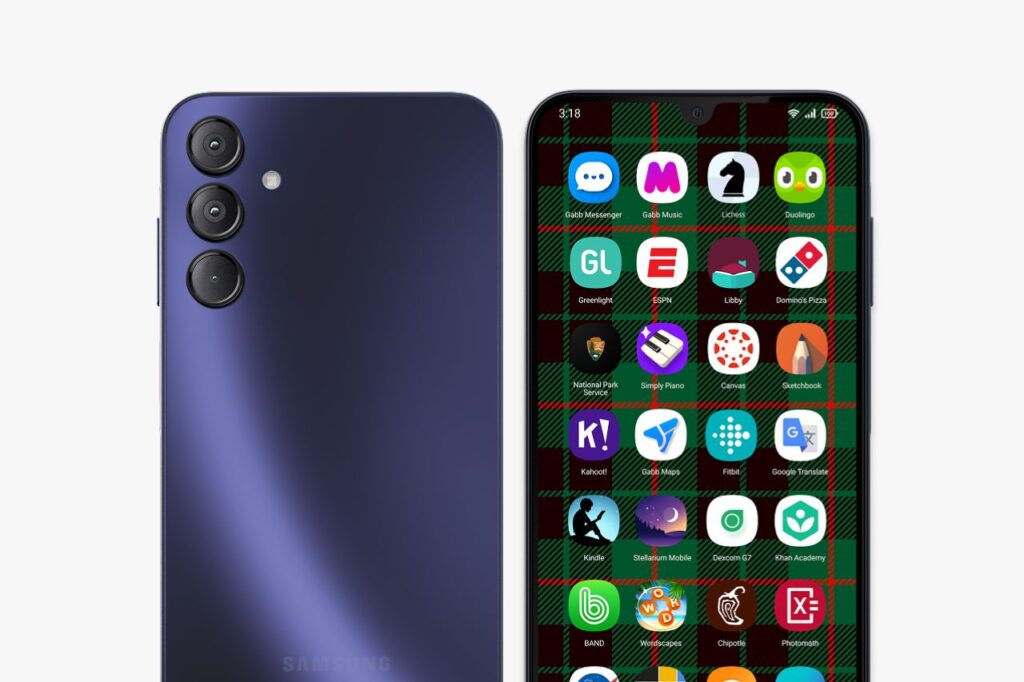
The Hardware: It is a Samsung Galaxy device. It looks exactly like a smartphone. It has a touchscreen, a camera, and a fingerprint reader.
The Software: It is locked down at the kernel level.
- No Browser. Period.
- No Social Media. No App Store.
- Safe Apps: It comes with “Gabb Music” (clean lyrics only), a calculator, a calendar, and maps.
Why Parents Love It: It has best-in-class GPS tracking. You can see exactly where your child is in real-time. It allows group texts (crucial for social life) but filters out nude images or bullying language automatically.
Why Kids Accept It: It doesn’t look like a “grandma phone.” They can still take selfies and listen to music, which are the two main things kids actually care about.
2. The “Hardcore” Minimalist: Light Phone II
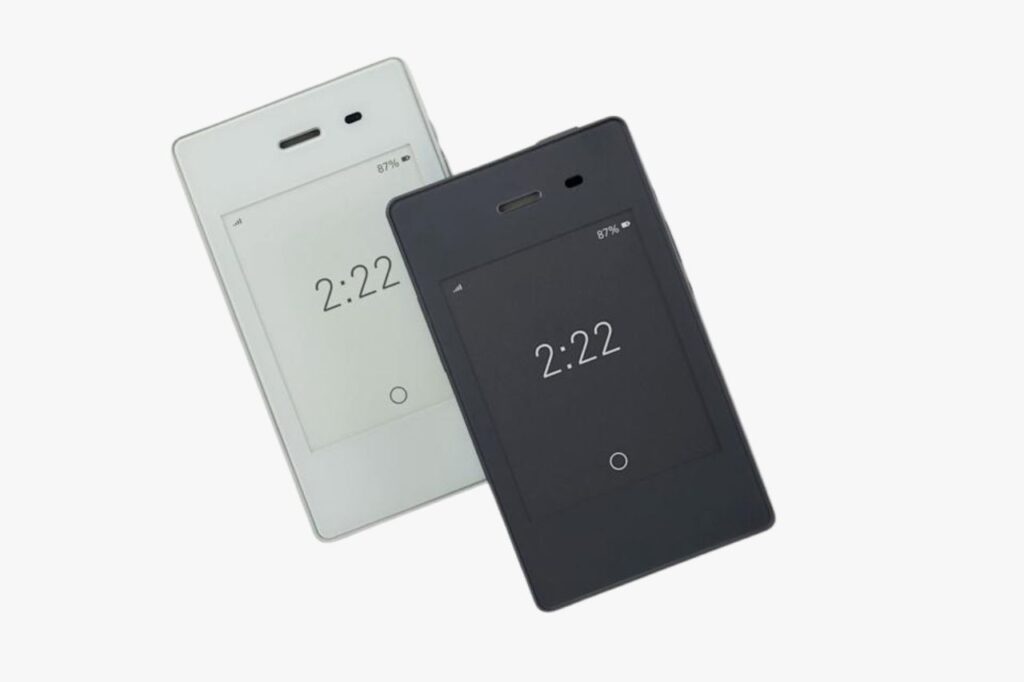
Best For: Ages 14-17 (The Aesthetic Teen / Artist)
If your teenager is a bit older and leans towards being “artsy” or “hipster,” the Light Phone II is a power move.
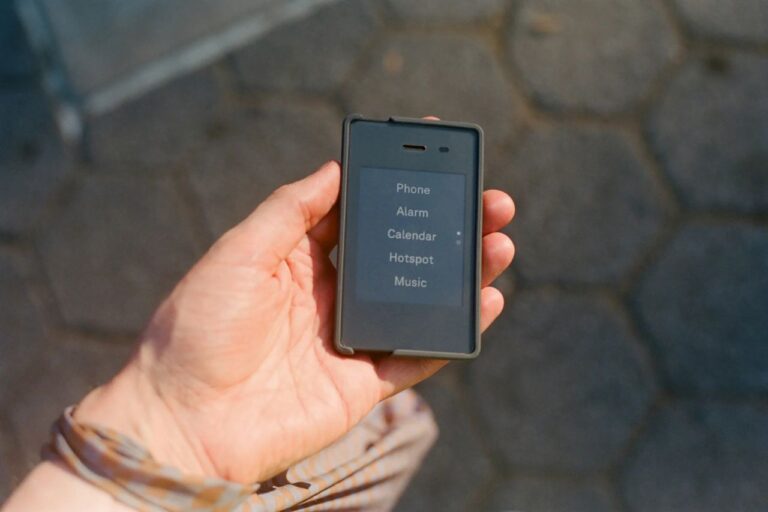
The Vibe: As we covered in our Light Phone II Review, this phone uses an E-Ink screen. It looks like a sleek, matte credit card.
- No Camera. (This is a pro or con, depending on your view).
- No “Infinite” Feed. The screen refresh rate is too slow for scrolling.
- Tools: Music, Podcasts, Directions, Calculator.
Why It Works for Teens: It positions “Digital Minimalism” as cool rather than restrictive. Instead of saying “You are too young for an iPhone,” you say “This device is for elite focus and creativity.” It is perfect for the teen who loves reading, music, or skating and wants to disconnect from the drama of Instagram.
The Catch: It is expensive ($299). And without a camera, they might complain about not being able to capture memories (solution: buy them a Paper Shoot Camera).
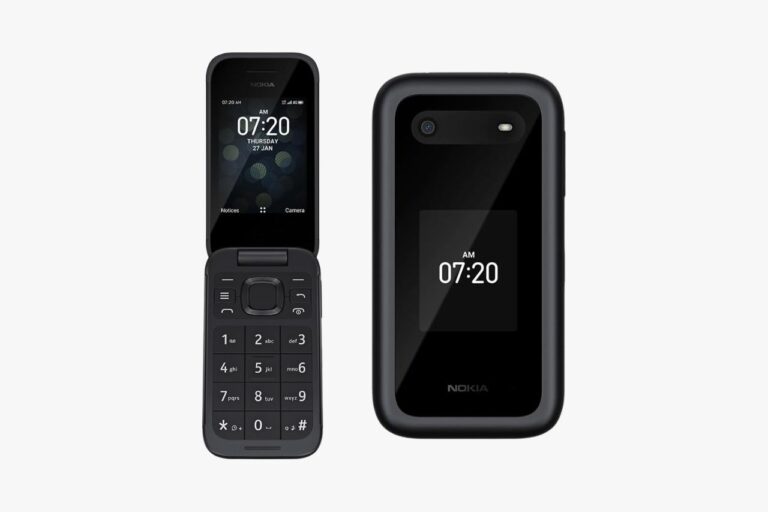
3. The “Burner” Option: Nokia 2780 Flip
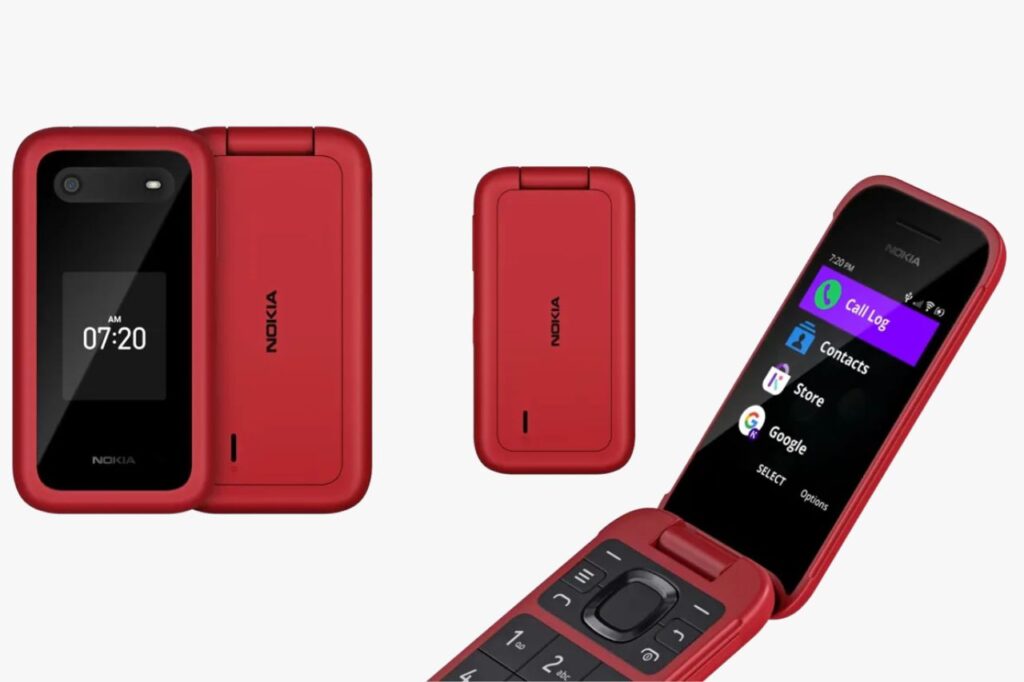
Best For: Ages 8-11 (The “I Might Lose It” Phase)
Let’s be real: an 8-year-old might leave their phone on the bus. You don’t want to lose a $300 device.
The Nokia 2780 Flip is the perfect “Starter Phone.”
- Cost: Under $90.
- Durability: It closes shut. Screen is protected.
- Features: It runs KaiOS. It technically has a browser and YouTube, but the screen is so small and slow that no child will become addicted to it. It is self-regulating through frustration.
Why It Works: It teaches the basics of phone ownership (charging it, answering calls) with zero risk. If they break it, you aren’t heartbroken. Plus, the “flip” action is surprisingly satisfying for fidgety kids.
Read our full Nokia 2780 Review
4. The “Manager”: Pinwheel
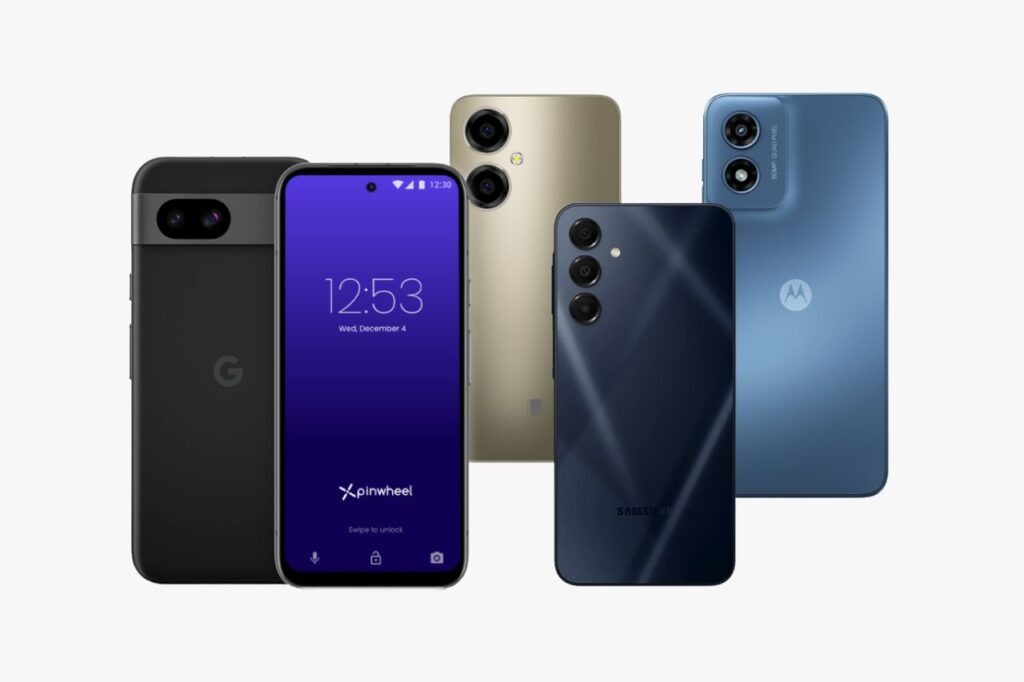
Best For: The Helicopter Parent (Granular Control)
Pinwheel is similar to Gabb (it uses a smartphone body), but it offers much more control to the parent via an app.
The Magic Feature: “Modes” You can schedule exactly what apps are available at what times.
- School Mode (8 AM – 3 PM): Only Calculator and Emergency Calls work. Everything else disappears.
- Homework Mode (4 PM – 6 PM): Spotify is allowed, but no texting.
- Free Time (6 PM – 8 PM): Texting and approved games are unlocked.
- Sleep Mode: Everything shuts off.
Why It Works: It eliminates the argument of “Get off your phone!” The phone simply stops working. The “bad guy” is the schedule, not the parent. It allows you to slowly unlock more features (like a curated App Store) as the child proves they are responsible.
The Conversation: How to Sell This to Your Kid
Buying the phone is easy. Getting your child to accept it without screaming is hard. Here is a script based on negotiation psychology.
Don’t say: “Smartphones are bad for you.” (This creates rebellion). Say: “We want you to be free.”
The Script:
“We love you too much to let an algorithm control your brain. Big Tech companies spend billions of dollars to make you addicted, to make you feel ugly, and to make you anxious so you buy things. We are giving you a ‘Freedom Phone.’ It keeps you connected to your friends and us, but it doesn’t track you or manipulate you. When you are older and your brain is fully built, you can handle the monster. But right now, we are protecting your freedom.”
What About “The Weird Kid” Syndrome?
The fear is valid: “Everyone else has an iPhone / Blue Bubbles.”
- Find Allies: You cannot be the only parent doing this. Talk to the parents of your child’s friends. If you can get 3-4 families to agree to a “Wait Until 8th” pact, the social pressure vanishes. They have a “tribe.”
- Compensate with Other Tech: If they have a dumbphone, maybe let them have a better gaming console or a high-end Digital Camera. Show them you aren’t anti-tech, just anti-addiction.
Final Verdict: The Best Investment
A dumbphone costs $100-$300. Therapy for anxiety, body dysmorphia, and cyberbullying trauma costs thousands.
Investing in a safe phone is not “strict parenting.” It is “protective parenting.” You wouldn’t let your 10-year-old walk alone through a dangerous city at night. Don’t let them walk alone through the internet.
Start with a Gabb or Nokia. Give them a childhood that exists in the real world, dirt, scraped knees, and boredom included.