Tin Can vs Waffle: Which Kids Landline Fits Your Home
By Finn Albar
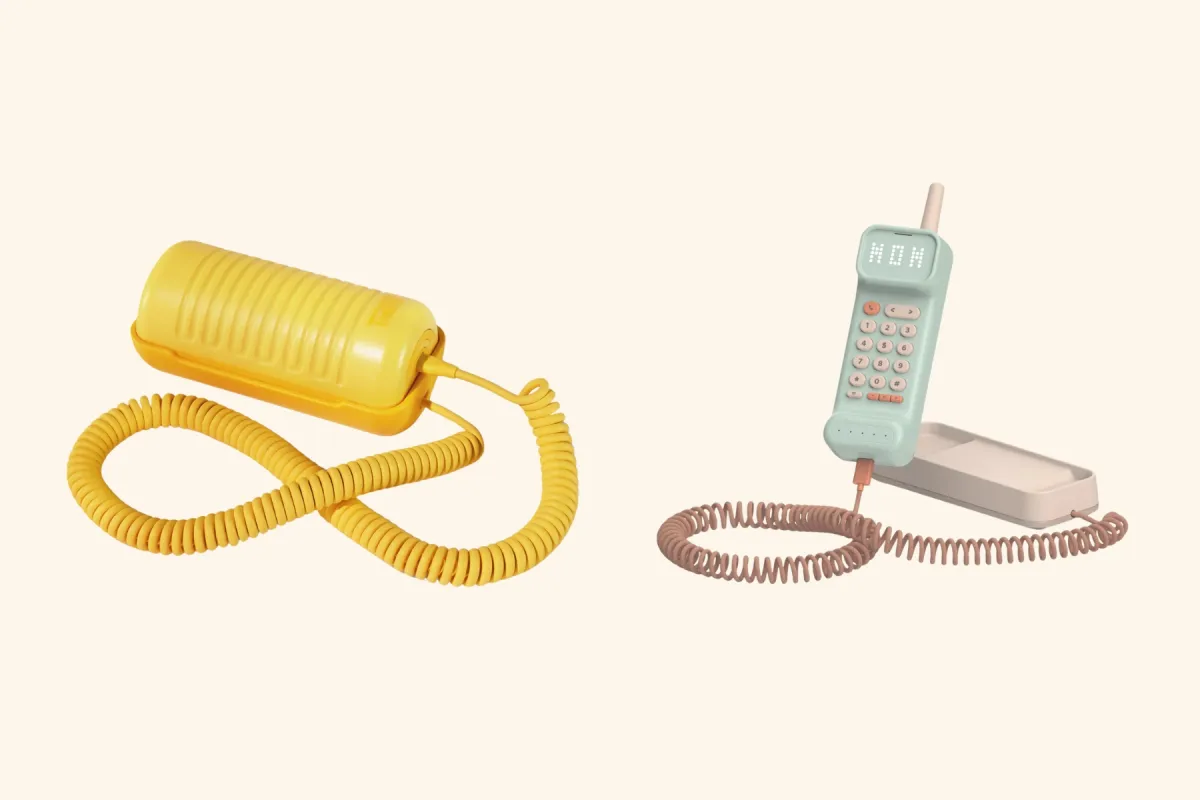
Tin Can vs Waffle comes down to who your child needs to call. Tin Can is the cheaper phone, with free calls to other Tin Cans. Waffle Home costs more, but its free plan also reaches one approved contact, such as a parent, and it works on 5 GHz Wi-Fi.
Both are Wi-Fi home phones that call only the people you approve, with no texts, apps, or browser. Both go silent in a power cut or an internet outage, and that includes 911.
A home phone is the lightest first phone. When your child starts going places alone, dumbphones for kids are the next step.
Price and two-year cost
Tin Can costs $100 in four colors, and Waffle Home costs $119 in three. Tin Can discounts orders of two or more phones, while Waffle publishes no multi-buy discount.
Both paid plans cost $9.99 a month. Tin Can’s Party Line also comes yearly at $99.99, and its first month is free. Waffle’s Home Plus+ starts with a 10-day trial, and Waffle publishes no yearly price.
| Phone and plan | Device | Plan | Two years |
|---|---|---|---|
| Tin Can, Can 2 Can | $100 | Free | $100 |
| Tin Can, Party Line yearly | $100 | $99.99 a year | About $300 |
| Tin Can, Party Line monthly | $100 | $9.99 a month, first month free | About $330 |
| Waffle Home, Free | $119 | Free | $119 |
| Waffle Home, Home Plus+ | $119 | $9.99 a month | About $359 |
The totals are before tax and shipping. For a school or a sports team, Tin Can also runs group orders with bigger discounts.
Winner: Tin Can. It costs less up front, and with a yearly plan it comes to about $60 less than Waffle Home with Home Plus+ over two years.
Who your child can call for free
The free plans differ in one way that matters. Tin Can’s free Can 2 Can plan calls other Tin Cans and 911, but no outside numbers, not even your cell.
Waffle’s free plan calls other Waffles, 911, and one approved contact, meant for a parent. Other regular numbers, such as a grandparent’s cell, need Home Plus+. The free plan caps calls at 400 minutes a month, and Waffle does not spell out which calls count toward it.
Winner: Waffle Home, if your child mostly calls you. Tin Can, if your child’s friends already own Tin Cans, since those calls are free with no published cap.
Calling other brands
A Tin Can and a Waffle can call each other, but only on paid plans. Tin Can treats a Waffle as an outside number, so the Tin Can family needs Party Line.
Waffle reaches other brands only on Home Plus+, which calls any approved regular number, a friend’s Tin Can included. Each family also approves the other’s number in its own app.
So a friendship across brands needs a paid plan in both homes, about $20 a month between the two families.
Winner: neither. Buy the brand your child’s friends already own, because same-brand calls are the free ones.
Calling family abroad
Waffle’s Home Plus+ includes calls to more than 50 countries, up to 120 minutes a month. You add the overseas number as an approved contact, and your child calls it like any other.
Tin Can’s Party Line reaches US and Canadian numbers only. There is no international add-on, so a grandparent in Mexico or the UK is out of reach.
Winner: Waffle Home, for any child with family outside the US and Canada.
How your child places a call
Tin Can works like an old landline. Your child dials a 10-digit number or a speed dial number you set. A long pause between digits can stop the phone registering them, so a young child has to dial quickly.
Waffle Home skips dialing. Your child moves through approved contacts with arrow buttons and presses call, and the keypad is there for 911. Waffle Home also has caller ID.
Tin Can has no screen, so it cannot show who is calling. It does have a speakerphone, which Waffle Home’s feature list leaves out.
Winner: Waffle Home for a child who cannot read numbers yet. Tin Can for a child who likes to dial, and for speakerphone calls.
Voicemail and voice notes
Tin Can has voicemail. Your child presses the smiley-face Tinothy button to hear messages or to record a greeting.
Waffle Home has voice notes instead, up to 20 seconds each. They travel between the phone and your Waffle Hub app, or between two Waffles. So you can leave your child a message from work without calling.
Winner: Waffle Home, because voice notes reach you without a call. Tin Can’s voicemail suits friends who call while your child is out.
Parent controls and alerts
Both apps let you approve who your child can call and who can call in. Two Tin Cans, or two Waffles, must approve each other before a call connects, and both apps show call history.
Quiet hours on Tin Can block calls both ways and send incoming calls to voicemail. Waffle has quiet hours and school hours. On both phones, 911 still connects during those hours.
Alerts are where Waffle pulls ahead. Waffle Hub notifies you when another Waffle asks to connect, and it sends a push notification for any 911 call. Tin Can emails you about contact requests only, not about calls or voicemail.
Each app allows one parent login for now, so two parents share the same account.
Winner: Waffle Home, for push alerts and a notice when your child calls 911.
Wi-Fi and setup
Tin Can joins 2.4 GHz Wi-Fi only. If your router puts both bands under one name, you need a separate 2.4 GHz network. Setup must also run on the main router, not a mesh point or an extender.
Guest networks and networks with a browser sign-in page do not work with Tin Can. Once it is set up, it can run on mesh Wi-Fi.
Waffle Home works on 2.4 or 5 GHz, but not 6 GHz. It pairs with your phone over Bluetooth during setup, and changing Wi-Fi networks later means pairing it again.
Winner: Waffle Home, for a home whose router has dropped 2.4 GHz or merges the two bands.
Power, battery, and the cord
Tin Can plugs into the wall and has no battery. Its handset sits on a twirly cord, so the call happens where the phone lives.
Waffle Home has a battery rated for up to 2 hours of talk and 5 hours of standby, and it charges on its base. Waffle’s own pages disagree on the cord: its specs describe a 10 ft curly cord, while its product page calls the phone cordless.
Winner: Waffle Home, for a handset that keeps working when someone knocks the plug out. Its battery still does not keep 911 working in an outage.
911 and outages
Both phones call 911, and both fail when the power or the internet goes down. Waffle Home has no battery backup for 911 during an outage, and a Tin Can needs power and internet for any call.
Tin Can makes you turn on 911 before the phone activates. The address check can take up to three business days, and dialing 933 reads back the address on file.
Waffle’s 911 is on by default and cannot be turned off. When your child dials it, Waffle Hub sends you a push notification with the time and your registered address.
Winner: Waffle Home, narrowly, for the parent alert. With either phone, keep a charged cell phone in the house for outages.
Phone numbers
Since September 2026, every Tin Can has a 10-digit number, and the old short Tin Can numbers became speed dials. Tin Can’s support team can change or reset the number later.
Every Waffle plan includes a number, and you pick its area code from across the US. You cannot change it after setup, and porting it out to another carrier costs $10.
Winner: Tin Can, because a number you regret is not permanent.
Shipping and where they sell
Tin Can ships within three business days in the US and Canada. Pre-orders for the UK, Australia, and New Zealand ship in November 2026.
Waffle Home is newer and sells in batches, and the current batch ships on October 30, 2026. Its US terms cover use in the United States only, and Australia has its own Waffle store.
Winner: Tin Can, if you want the phone this week or live in Canada.
Returns, warranty, and privacy
Tin Can takes returns for 45 days and sends a free label once it approves the return, but it keeps the original shipping charge. Tin Can publishes no hardware warranty period.
Waffle takes returns for 30 days with a prepaid label, and its 12-month warranty covers manufacturing defects.
Tin Can does not record calls, though it logs who called whom and for how long. Waffle keeps call logs for the life of your account and 24 months after you cancel, and it names training AI models among its uses of data.
Winner: Tin Can, for the longer return window and a plain promise about recording. Pick Waffle Home if a written warranty matters more.
When a landline is not enough
A home phone stops being enough once your child goes places alone. If your child walks to school, rides the bus, or needs to text, the next step is a phone that leaves the house.
Waffle Go is Waffle’s handset for that job, with 4G and GPS, at $169 plus $17.99 a month. Our Bark vs Gabb vs Pinwheel comparison covers managed kids phones with contacts and schedules you run from your own phone.
If your child’s first phone will be a regular smartphone, how to set up a phone for a child covers the built-in controls.
Which one to pick
- Your child’s friends have Tin Cans: Tin Can, because those calls are free.
- Your child mostly calls you: Waffle Home, since its free plan includes one approved contact, meant for a parent.
- Family lives abroad: Waffle Home with Home Plus+.
- Your child cannot read numbers yet: Waffle Home, for its arrow buttons.
- Your router runs 5 GHz only: Waffle Home.
- You want outside calls for the least money: Tin Can with a yearly Party Line plan.
Each landline has its catch. Tin Can cannot reach you for free and shows no caller ID, while Waffle Home costs more and caps free calls at 400 minutes. If neither fits, Pinwheel Home has the cheapest plan for a few outside numbers, and Ooma MyPhone has three-way calls.
Common questions
Can a Tin Can call a Waffle?
Yes, but both families need a paid plan. The Tin Can needs Party Line, because a Waffle number is an outside number, and the Waffle needs Home Plus+ to reach regular numbers. Each family also approves the other’s number.
Is Tin Can or Waffle better?
Tin Can is better for free calls with friends who own Tin Cans, and it costs less over two years. Waffle Home is better if your child mostly calls you, calls family abroad, or cannot dial yet.
Does Waffle Home have a free plan?
Yes. It covers calls to other Waffles, one approved contact, a phone number, voice notes, and 911, up to 400 minutes a month. Home Plus+ adds more contacts and international calls for $9.99 a month.
Does Tin Can work on 5 GHz Wi-Fi?
No. Tin Can joins 2.4 GHz networks only, so a router that broadcasts only 5 GHz will not work. Waffle Home works on 2.4 or 5 GHz.
Who your child will call most
Pick Tin Can if your child’s friends own one, because free Tin Can calls are its whole appeal, and it costs less over two years. Pick Waffle Home if your child mostly calls you or family abroad, or if your router has moved to 5 GHz.
Whichever you choose, keep a charged cell phone in the house, because neither phone calls 911 in an outage.