
You downloaded the app blocker. You turned off your phone. You sat down to finally break free from the endless scroll. But then it hit you. You felt that uncomfortable urge to grab your screen. You did not know what to do with your hands or your mind.
Most people fail at taking a digital detox. But they do not lack willpower. They fail because they leave an empty space when the screen goes dark. You need a solid plan for your downtime to stop scrolling for good.
Your brain craves action. You must give it something meaningful to do. Otherwise, you will fall right back into doomscrolling. You might even consider switching to one of the best dumbphones to force a real break.
The answer is not just stopping the scroll. We must replace it with analog hobbies to replace doom-scrolling. These offline activities engage your senses and calm your racing mind.
These tactile habits build self-awareness. They actively support your mental health. They bring back the quiet mindfulness we lose in the glow of a screen.
1. Paper Journaling

Social media fills your mind with other people’s problems. Writing in a journal does the exact opposite. It is an analog activity that empties out your own thoughts and feelings.
Writing by hand creates a special link to your brain. You cannot speed through handwritten words like online posts. Your thinking slows down to match your moving hand.
What you need to get started:
- A good notebook – Pick something like a Leuchtturm1917 or Moleskine. Quality paper makes your writing feel important and worth your time.
- A decent pen – Stop using cheap pens. Try a fountain pen like the Pilot Metropolitan. The scratch on the paper feels incredibly grounding.
You do not need any special skills or art talent. Just write down the messy thoughts bouncing around in your head.
Many people use these pages for self-improvement. They track daily goals or draw vision boards to plan their future.
This simple act clears your mind. It helps you figure out your own thoughts. To focus even better, try journaling at a clean, minimalist desk setup.
2. Film Photography

Film photography is very different from taking phone pictures. On a smartphone, you snap dozens of photos and delete most of them. With film, you get a limited number of chances.
Why this helps you scroll less:
- You pay for each photo you take.
- You cannot see your pictures right away.
- You only get about 36 shots per roll.
This limit makes you slow down. You pay real attention to the world around you. You look for authentic moments, not quick content. If film feels too hard, using one of the best compact cameras to replace your iPhone offers a similar break.
You develop your film weeks later. Seeing the printed photos feels deeply rewarding. It is much better than getting hollow likes on social media.
What you need to start:
- Camera: A Kodak Ektar H35 works great for beginners. It costs much less than professional models.
- Film: Kodak Gold 200 creates warm, natural colors.
You do not need fancy gear to begin. The point is to practice patience. You become more thoughtful about what you choose to photograph.
3. Making Coffee by Hand

We often check our phones while the electric coffee maker runs. You stand in the kitchen, but your mind is wandering online.
Brewing coffee by hand changes this bad habit. It takes about 15 minutes. It requires your absolute full attention. You must watch the water heat and check the grind size.
You grind fresh beans by hand. The rich smell hits you before any digital phone alert can.
What you need to get started:
- A manual brewer: Try a Hario V60 or AeroPress. These tools keep you highly involved in the process.
- A hand grinder: The Timemore C2 is widely recommended for beginners.
Turning the grinder handle wakes up your body. Your hands stay busy with real tasks. You are not mindlessly scrolling. This small routine gives your brain a concrete focus.
If you have extra time, try a few minutes of yoga. It stretches your body and grounds your mind before the busy day starts.
4. Reading Physical Books

Printed books offer something screens cannot match. They pull you away from endless digital feeds. They have no pop-up alerts to steal your attention.
You cannot search them with a keyboard shortcut. They have actual weight in your hands. You can feel and smell the paper pages.
Physical books help you practice deep reading. This means focusing on one idea for a long stretch of time. Many of us are losing this offline ability.
You can also join a local book club. This turns a solo habit into a social event. You get to discuss real ideas in person.
What you need to get started:
- A book worth your time: Read “Digital Minimalism” by Cal Newport to understand your tech habits. Or, grab a fun sci-fi story like “Dark Matter.”
- A clip-on reading light: This lets you read in bed without harsh blue light ruining your sleep schedule.
The main goal is to rebuild your focus. You will learn to concentrate without apps pulling you away every few minutes.
5. Silent Walking

Most people hate being in quiet spaces. You probably grab your earbuds when you leave the house. We fill walks with podcasts or music. Silence feels like wasted time.
But silent walking gives your mind space to breathe. Your brain needs quiet moments to solve problems. It needs total silence to think creatively.
This calm mental state only turns on when we unplug. We must stop feeding our minds constant digital content.
Here is what to do:
- Leave your phone at home or use “Do Not Disturb” mode.
- Walk for 20 minutes without listening to anything.
- Push through the first few minutes of boredom.
- Notice how your thoughts calm down after the discomfort passes.
The first part of your walk will feel strange. You could also trade the walk for a peaceful bike ride through a park.
Both activities let you move without a screen in your hand. Soon, your racing mind will start to clear.
6. Art Without Pressure
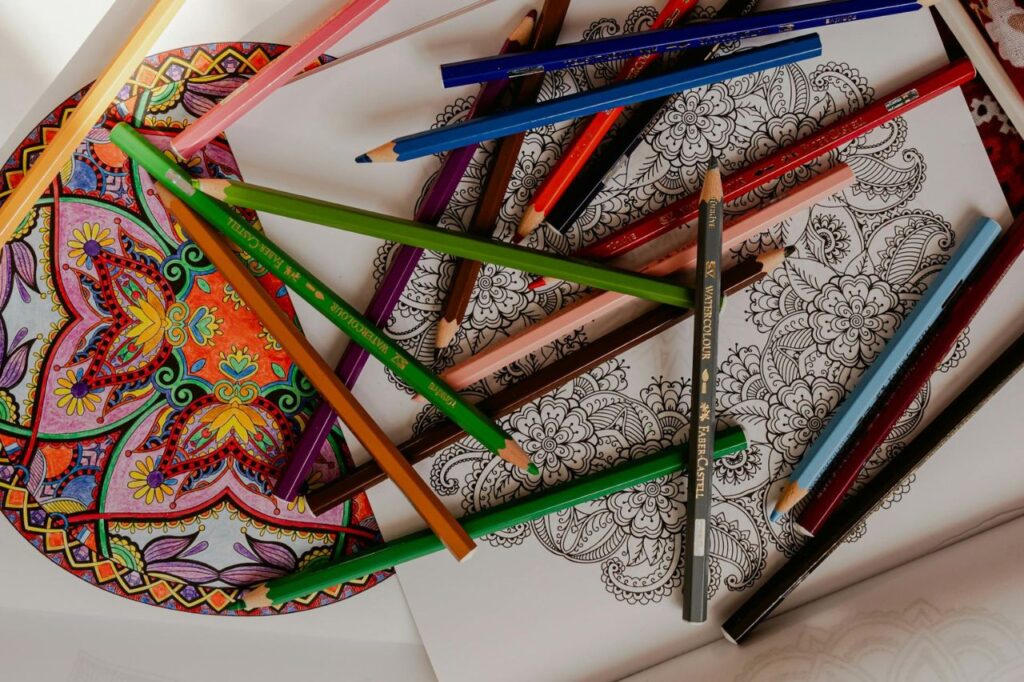
You do not need any talent to use a coloring book. That is the true beauty of it.
Adult coloring keeps your hands busy with simple motions. Your brain focuses entirely on choosing colors. You just try to stay inside the lines.
This gives your mind a much-needed break. It is an activity that is never stressful or demanding.
What makes this different from scrolling:
- Your hands move with a real purpose.
- Your eyes focus gently on one thing at a time.
- Your brain enters a calm and focused state.
Start with colored pencils and a fun coloring book. Mandalas work well because of their rich patterns. Nature scenes offer great variety. Pick soft pencils to blend colors smoothly.
Try similar activities like cross-stitch or watercolor painting. Many people are picking up traditional “grandma hobbies” to find offline peace.
Tasks like knitting keep your hands busy. Your mind slowly settles down. Knitting and crochet help you stay highly focused and present.
You can also try folding paper into origami shapes. The goal is not perfection. The goal is taking a gentle break from your phone screen.
7. Making Your Own Meals

Ordering takeout requires zero effort. Making food yourself changes everything. Cooking from scratch turns basic ingredients into healthy meals. It feeds both your body and mind.
Why this replaces phone time: Your hands stay busy. Chopping vegetables and stirring sauces demand your full focus. You hear the food cooking. You smell the warm spices. You feel the textures change.
You cannot reach for your phone with sticky flour on your hands. Baking bread or feeding a sourdough starter demands true, unbroken focus.
What you need to start:
- A good knife – Sharp blades make prep work safe and easy.
- A solid pan – A cast iron skillet works great and lasts for years.
Both tools are very affordable. They connect you to a slower style of living. Cooking brings a deep satisfaction that screens can never provide.
8. Board Games & Puzzles

Scrolling leaves you entirely alone with your phone. Puzzles and games bring real people together instead. Your brain gets a real workout when you play offline chess.
Sudoku and board games keep your mind sharp. They force you to recognize visual patterns. They build thinking skills that fade when we only watch short videos.
What to get started:
- For puzzles: Try a 1,000-piece gradient puzzle for a calm but tough challenge.
- For solo board games: The card game Friday needs zero screen time.
- For two players: Patchwork is great for couples and keeps phones hidden.
Work on crosswords alone or challenge friends to a game night. Solve a Rubik’s cube for a fun physical challenge. Word puzzle books offer hours of screen-free joy.
Either way, your brain stays happily active instead of passively scrolling.
9. Indoor Gardening

Plants do not care about your digital notifications. They grow on their own quiet schedule. This makes them powerful tools against daily doomscrolling.
Watering a plant shifts your rhythm of time. It connects you to nature. You measure growth in weeks and months, not rapid seconds.
What makes this work:
- You cannot rush a seed to sprout.
- Each new leaf is a victory worth celebrating.
- Your hands stay busy with real soil instead of glowing screens.
Start with these basics:
Try a Snake Plant or ZZ Plant first. Both plants survive if you forget to water them for a week. Buy a simple spray bottle for gentle misting.
Gently wiping dust off plant leaves is very calming. It creates a quiet, meditative moment that scrolling never provides.
10. Fixing & Restoring

When things break, we grab our phones to buy quick replacements. What if we stopped scrolling and started fixing them instead?
Repairing things gives you real power. You are not just watching online videos. You are improving the physical world with your own two hands.
What You Can Start Fixing:
- Sew loose buttons on your favorite shirt.
- Fix cracked mugs with gold glue (the Japanese art of Kintsugi).
- Condition worn-out leather shoes or bags.
- Repair small electronics that stopped working.
- Tighten the wobbly legs on your furniture.
You do not need fancy skills to fix things. A simple sewing kit costs less than $10. A basic toolkit opens up a world of home repairs. Leather cream brings old boots back to life.
Polishing shoes or stitching a pocket is deeply calming. Your hands stay busy. Your mind gets quiet. Each fix proves you can solve real-world problems.
Writing snail mail to a friend is also great. A handwritten letter means much more than a fast digital text message.
11. Learn an Instrument

Learning an instrument is highly rewarding. Playing the guitar or piano requires physical skill. It demands serious mental focus.
Music provides a creative outlet that apps cannot fake. You feel the vibration of the strings. You hear beautiful notes fill the room.
Start with small goals. Got a broken item sitting in a drawer? Fix it this weekend. Your brain might fight you at first. It wants quick digital dopamine hits. Push through that urge.
This is how you rebuild your attention span. Step away from the screen and into the real world.
Taking a break from your devices does not have to feel like a punishment. It is an open invitation to rediscover the physical world. Pick just one of these analog hobbies to try this weekend. Leave your phone in another room, let your hands stay busy, and watch how quickly your mind finds peace.