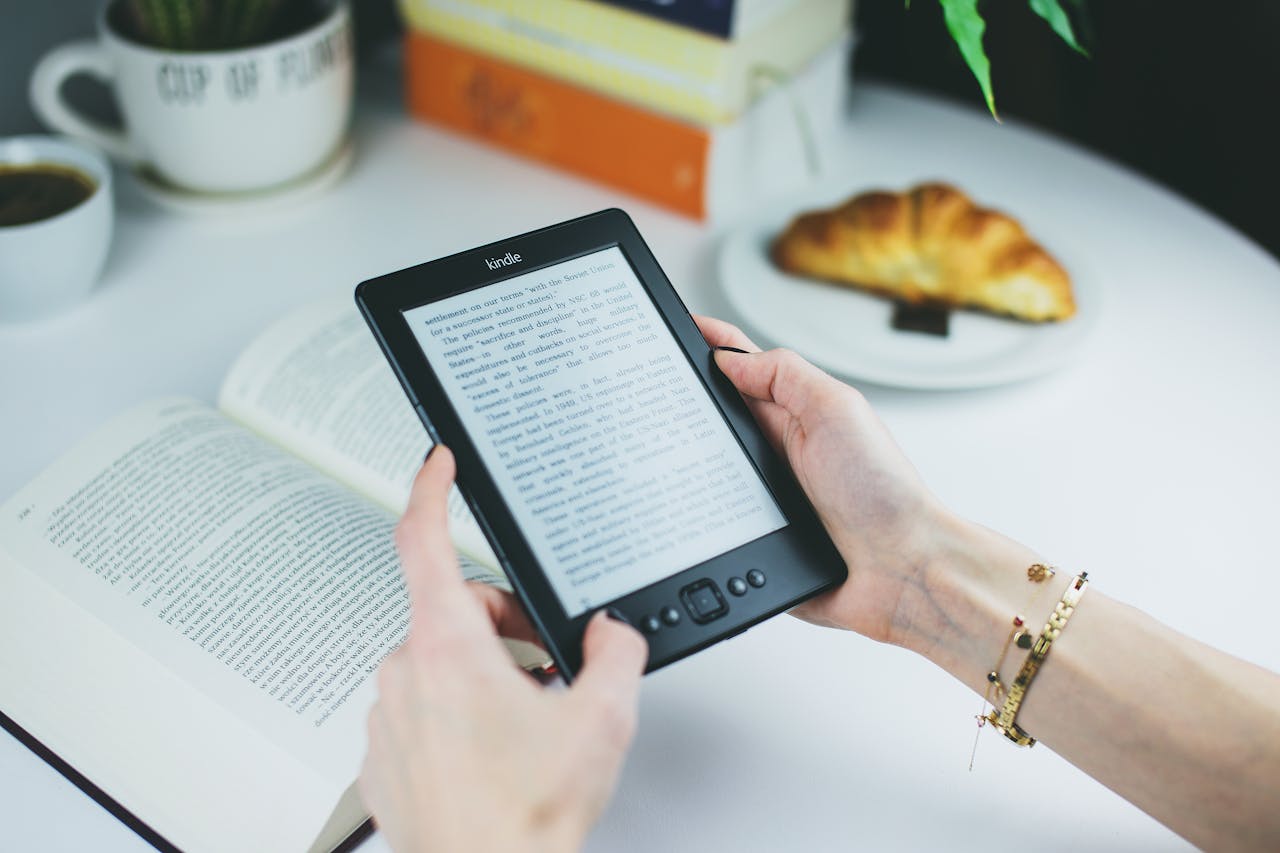
Choosing between a Kindle Paperwhite and a physical book is not just about tech versus tradition. In our noisy world, it is really about protecting your attention. Your best choice depends on how you read, where you read, and what keeps you focused.
Do you just want the short answer? The Kindle Paperwhite is best for travel, instant book access, and reading in the dark. Physical books are better for tactile joy, spatial memory, and deep immersion.
You also do not have to pick just one. Many mindful readers enjoy using both formats for different moments.
Compare the Reading Experience
| Feature | Kindle Paperwhite | Physical Books |
|---|---|---|
| Weight & Portability | Weighs about 205g and holds thousands of books. | Bulky, and you are limited by the book’s size and weight. |
| Screen / Pages | 300 ppi E-ink screen with an anti-glare finish. | Crisp, fixed text with natural contrast. |
| Lighting | Adjustable front light with warm and cool tones. | Requires a lamp or natural ambient light. |
| Durability | Water-resistant (IPX8 rating) but requires charging. | Very durable, but easily damaged by water. |
| Memory & Focus | Great for reading fast and achieving fluency. | Better for retaining information using spatial memory. |
Reading Experience and Focus
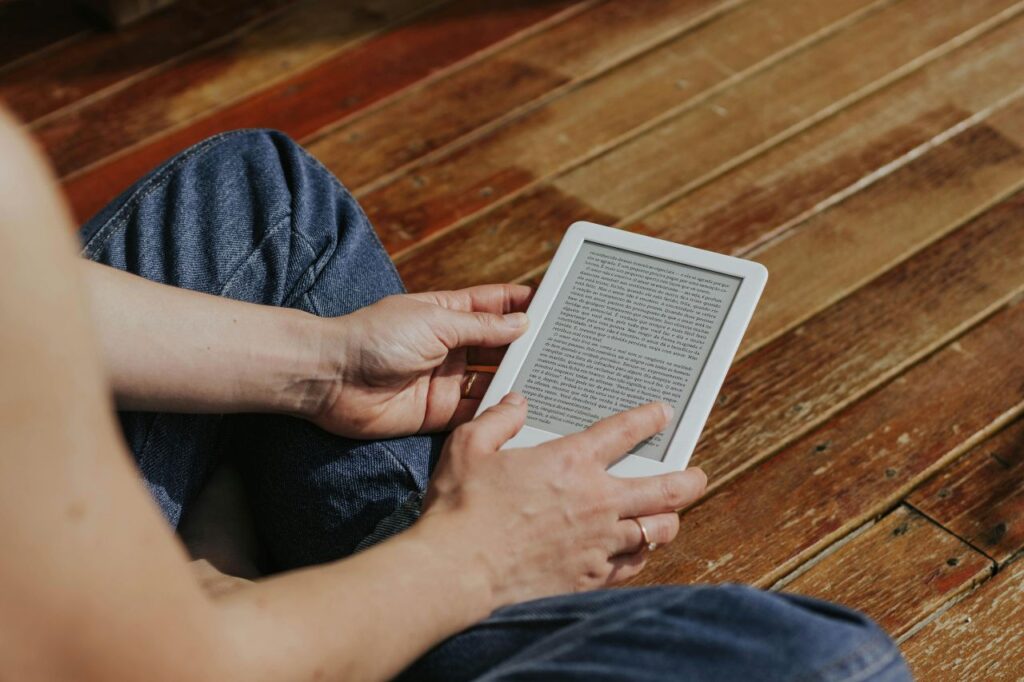
Your comfort changes based on the screen type and lighting. The Kindle Paperwhite feels much closer to real paper than a phone. However, a physical book still offers a simpler reading space.
How E-Ink Feels on Your Eyes
The Kindle uses special tech called e-ink. E-ink is a display that mimics the look of real ink on paper, making it calmer on your eyes than a glowing tablet. It also features a sharp 300 ppi resolution and an anti-glare surface.
Still, many readers find real paper feels more natural. You can see the texture of the page and feel your progress. If you want pure tactile comfort, physical books still win.
Warm Light and Better Sleep
The Kindle Paperwhite has an adjustable warm light. This front-lit display creates a low blue light experience, which prevents the harsh glare of a phone. This makes it perfect to use before you turn on your favorite alarm clock and go to sleep.
Physical books require an outside light source. If you do not have a good reading lamp, a Kindle is much easier to use in bed.
Escaping Digital Noise
A dedicated e-reader limits your digital distractions. You do not have to fight off texts or social media alerts. It is almost as effective as using strict app blockers on your phone.
Of course, a physical book has absolutely zero digital layers. There are no batteries to charge and no settings to tweak.
Memory, Learning, and Deep Reading
The format you choose can impact how well you learn. Both formats work well for basic understanding. But print books often help you recall long-form information better.
The Power of Spatial Memory
When you read a physical book, your brain builds a map of the pages. You might remember an important quote was at the bottom left of a page. This is called spatial memory.
A 2021 study showed that spatial memory aids in information retention. This makes physical books great for studying, much like writing notes in good paper planners.
When to Read on a Kindle
Digital books are highly useful if you love built-in tools. You can look up words instantly with the integrated dictionary. You can also highlight text and make the font larger.
Kindles are also fantastic for massive books. If a novel is over 700 pages, a Kindle saves you from holding a heavy brick. Readers love e-readers for big, chunky books to save their wrists.
Convenience and Everyday Habits
The Kindle Paperwhite truly shines when it comes to convenience. It helps you read more by fitting easily into the small gaps of your day.
Lightweight and Travel-Ready
A Kindle Paperwhite only weighs about 205 grams. Instead of packing one heavy book, you can carry thousands of titles everywhere. It is a great addition to a clean, minimalist desk setup.
It is also water-resistant with an IPX8 rating. You can safely read in the bath or by the pool without worry.
Do E-Readers Help You Read More?
Data suggests that owning an e-reader increases how much you read. In the U.S., e-book readers average 17 books per year. People who do not use e-books average only 10 books per year.
This is likely due to quick access. You can buy a book and start reading in minutes.
Cost and Building a Library
You must think about more than just the price of one book. You have to consider the device cost, subscriptions, and library access.
Saving Money With Digital Books
The Kindle device costs money upfront. However, e-books are usually cheaper than new print books. You can also track sales using websites like eReaderIQ.
The best secret is the library. You can borrow e-books for free using apps like Libby. You can easily send these library books directly to your Kindle.
The Joy of Collecting Print
Physical books remain unmatched for collecting and emotional connection. Many readers compare print books to vinyl music records. You might stream most of your music, but you buy vinyl when a record really grabs you.
It works the same way for reading. A Kindle is for books you want to read, but physical copies are for books you want to own.
Which Format Fits You Best?
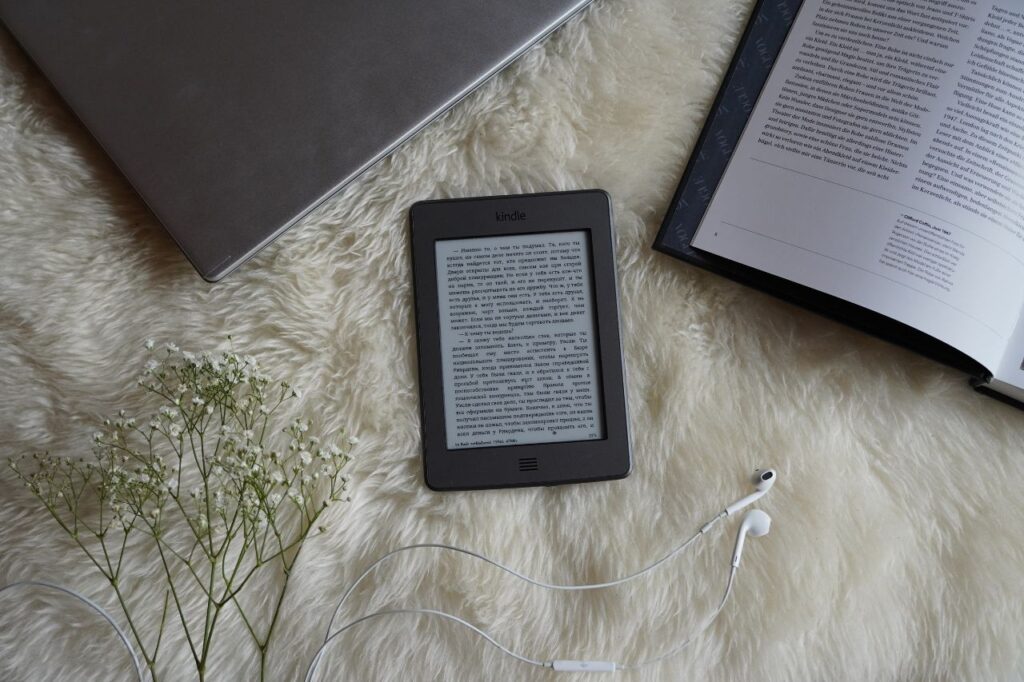
The right choice comes down to your daily habits. The Kindle Paperwhite offers incredible features:
- E-ink display that looks like paper.
- Warm light for mindful night reading.
- Waterproof design.
- Built-in dictionary for quick learning.
- Adjustable fonts and text spacing.
If you want wireless charging and more storage, the Kindle Paperwhite Signature Edition is an option. But for most people, the standard Paperwhite is perfect.
Conclusion
There is no right or wrong way to read. If you travel often or want an easy way to read in bed, the Kindle Paperwhite is a beautiful tool. If you want to unplug completely and build a personal library, physical books are timeless. The best choice is simply the one that helps you slow down, protect your peace, and enjoy exploring offline hobbies.