Why Willpower Fails: The Neuroscience of “Ugly” Phones

You have probably told yourself this lie before.
“I just need more self-discipline.”
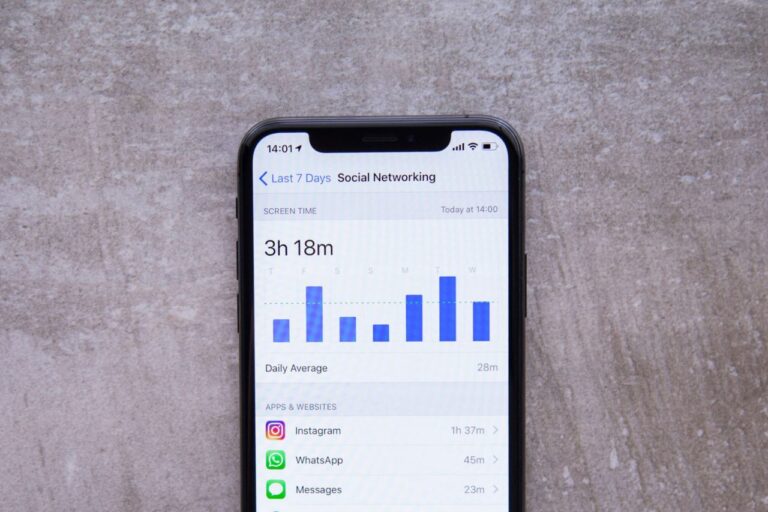
You look at your Screen Time stats. You feel the guilt rising in your chest. You promise yourself that tomorrow will be different. You promise that you will simply choose not to open Instagram. You will simply decide to focus.
But tomorrow comes, and within hours, you are back in the loop. Your thumb is scrolling before your conscious brain even realizes what happened.
For years, we have treated screen addiction as a moral failing. We treat it as a lack of character. We think that if we were just stronger, smarter, or more disciplined, we could win the battle against the algorithm.
I have good news and bad news.
The bad news is that you cannot win this battle with willpower alone. The game is rigged against your biology.
The good news is that new research published in 2025 proves exactly why willpower fails, and offers a scientific solution that requires zero discipline.
It is not about trying harder. It is about making your phone “uglier.”
Hi, I’m Finn Albar.
At PauseGadget, I often talk about tools like Minimalist Launchers and Grayscale Mode. Until recently, these were just “hacks” shared by productivity geeks. But now, we have hard data to back them up.
New studies from 2025 have cracked the code on the neuroscience of Friction. Here is why your brain loves colorful icons, why planning to quit doesn’t work, and how adding a simple 2-second delay can save you hundreds of hours a year.
The Myth of Conscious Choice
To understand why we fail, we have to look at how the brain processes a smartphone.
We like to think we are rational beings. We think we pick up our phone because we have a specific goal, like “Check the weather” or “Reply to Mom.”
But researchers Serenko and Turel propose a “Dual-Attitude Model” of system use.
- Explicit Attitude: This is your logical brain. It says, “I want to use my phone to be productive.”
- Implicit Attitude: This is your subconscious brain. It says, “Phone equals pleasure. Phone equals dopamine.”
The scary part? Your implicit attitude drives your behavior automatically, without you ever forming a conscious intention.
This is why you find yourself opening TikTok when you meant to open your Calculator. Your brain is running on autopilot. It creates a “Habitual Sequence” where a trigger (seeing the phone) leads immediately to an action (unlocking and scrolling) with zero cognitive effort.
Why “Planning” to Stop Is Not Enough
You might think the solution is to make a better plan. You might say, “If I study, I will put my phone away.”
A 2025 study led by Brockmeier tested this exact theory. They took a group of university students—a demographic known for high smartphone usage—and guided them to create detailed “Action Plans” and “Coping Plans” to reduce their screen time during exam periods.
The students wrote down exactly when and where they would avoid their phones. They had the intention. They had the plan.
The result? It didn’t work.
The study found “no significant effect on total smartphone usage time” in the group that used planning compared to the control group. Even with a clear plan, the students couldn’t stop.
Why? Because smartphone usage is fragmented. It doesn’t happen in one big block you can plan for; it happens in hundreds of micro-moments throughout the day. A push notification here, a quick check there. These micro-habits slip through the cracks of our willpower.
This proves that internal motivation isn’t enough. You need an external force. You need Friction.
The 805-Minute Miracle
If planning fails, what works?
Another groundbreaking study from 2025 by Schraggeová and Bisaha provides the answer. They tested the effectiveness of a specific tool: The Minimalist Phone app (a launcher that turns your screen into a text-based list and hides colorful icons).
They split participants into two groups.
- The Control Group: Used their phones as normal.
- The Experimental Group: Used the Minimalist interface for 14 days.
The results were staggering.
The group using the “Ugly” text-based interface reduced their screen time by an average of 805 minutes over the two weeks.
Let that sink in. That is over 13 hours of life reclaimed in just two weeks.
In comparison, the control group (who didn’t change their interface) only reduced their time by 209 minutes. The intervention group saw a massive 15.18% reduction in total usage, compared to just 5.95% in the control group.
Furthermore, 72.4% of all participants using the minimalist interface successfully reduced their screen time.
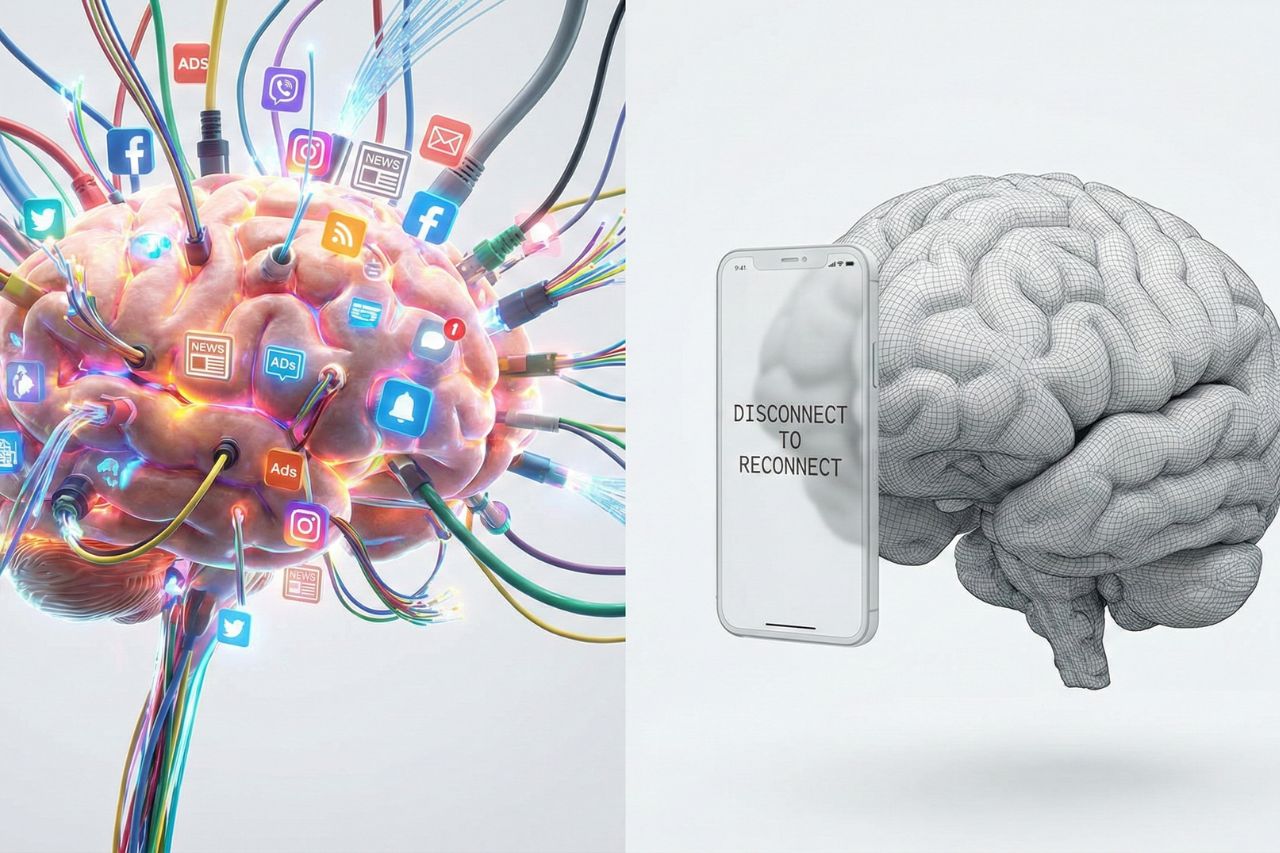
This wasn’t magic. It was neuroscience. By removing the colorful icons, the app disrupted the “Visual Triggers” that cue unconscious behavior.
How “Ugly” Breaks the Loop
Why does removing icons make such a huge difference?
It comes down to Cognitive Load.
Modern interfaces are designed for “Ease of Use.” They want to reduce the friction between your thought and the app opening to zero. Recognizing a colorful logo (like the blue “f” of Facebook) happens instantly in the visual cortex. It requires no effort.
When you switch to a text-only launcher (like Niagara, Olauncher, or Minimalist Phone), you break that speed.
To open Instagram, you have to:
- Unlock the phone.
- Look at a list of text.
- Read the words to find “Instagram.”
- Tap the word.
That process takes maybe 1 or 2 seconds longer than tapping an icon. But that tiny delay—that Friction—forces your brain to switch from System 1 (Autopilot) to System 2 (Logic).
The study notes that this interface “increases cognitive effort” by adding steps like searching an alphabetical list. It makes the phone less intuitive.
And that is the point. By prioritizing Control over Convenience, you force yourself to make a conscious choice. You have to decide to open the app, rather than just reacting to a colorful button.
The “Time Density” Trap
There is another layer to this, highlighted by a separate 2025 study by Černohorská et al.
They found that digital technology creates a sensation of “Time Loss” not just because we waste time, but because we fill every empty second with digital noise.
Because our phones are so easy to use, we use them to fill “Micro-Boredom.” We check them in the elevator. We check them at red lights. This leads to a feeling that “Time is Forgotten”. We lose our temporal awareness. We look up and realize an hour has passed.
By adding friction (making the phone ugly or harder to use), we stop filling these gaps. We reclaim those micro-moments. We allow ourselves to be bored again. And as we discussed in our article on The Benefits of Boredom, that is where mental clarity begins.
How to Engineer Friction
You don’t need to be a researcher to apply these findings. You can engineer friction into your device today.
Here is the hierarchy of friction, from “Gentle Nudge” to “Nuclear Option.”
Level 1: Visual Friction (The Grayscale Method)
The simplest way to replicate the study’s results is to remove color. As the research shows, visual cues trigger unconscious behavior. Without color, the reward signal is dampened.
Action: Turn your phone to Grayscale Mode. It’s free and built into every iPhone and Android.
Level 2: Interface Friction (The Minimalist Launcher)
If you are on Android, this is the sweet spot. Replicate the 805-minute saving by installing a launcher that hides icons.
Action: Download one of the Best Minimalist Launchers. The study specifically used Minimalist Phone, but Niagara or Olauncher work on the same principle of text-based lists.
Level 3: Barrier Friction (The App Blocker)
Sometimes, visual changes aren’t enough. You need a wall. Apps like Opal or Freedom introduce a “pause” or a strict block before you can open a distracting app.
Action: Set up a “Deep Focus” session using an App Blocker during your work hours. This forces you to confront a block screen, giving your rational brain time to intervene.
Level 4: Hardware Friction (The Dumbphone)
This is the ultimate friction. If the app isn’t on the device, you can’t use it. Devices like the Light Phone II or the Punkt MP02 are designed with friction in mind. Texting is slower. There is no feed. The device fights back against mindless usage.
Action: Read our guide on the Best Dumbphones of 2026 to see if you are ready for the switch.
Friction is Freedom
We have been sold a lie that “convenience” is the ultimate goal of technology. We were told that if things were faster and easier, we would be happier.
The data from 2025 proves the opposite. Ease of use is what traps us. When technology is frictionless, we slide into habits that don’t serve us. We lose hours of our lives to apps we don’t even like.
Friction is not an inconvenience. Friction is a boundary.
It is the speed bump that slows you down enough to ask: “Where am I going?”
You don’t need more willpower. You don’t need to shame yourself for your lack of discipline. You just need to make your phone a little bit harder to use.
Make it ugly. Make it slow. Make it boring. And watch your life come back in full color.
Further Reading

Brockmeier, L. C., et al. (2025). "Planning a digital detox: Findings from a randomized controlled trial to reduce smartphone usage time." Published in Computers in Human Behavior. Read the study here

Schraggeová, M., & Bisaha, D. (2025). "The effect of digital detox through digital minimalism using the MinimalistPhone app." Published in Computers in Human Behavior Reports. Read the study here