Kindle Paperwhite vs. Physical Books: Which is Better for Deep Reading?

You know that smell.
It’s a specific mixture of vanilla, almond, and old glue. It’s the scent that hits you the moment you walk into a used bookstore. For book lovers, that smell is a drug. It triggers memories of rainy afternoons and stories that changed your life. It’s tactile. It’s real.
For centuries, the physical book was the perfect technology. It required no battery, it was durable, and it offered a sensory experience that engaged your fingers, eyes, and nose all at once.
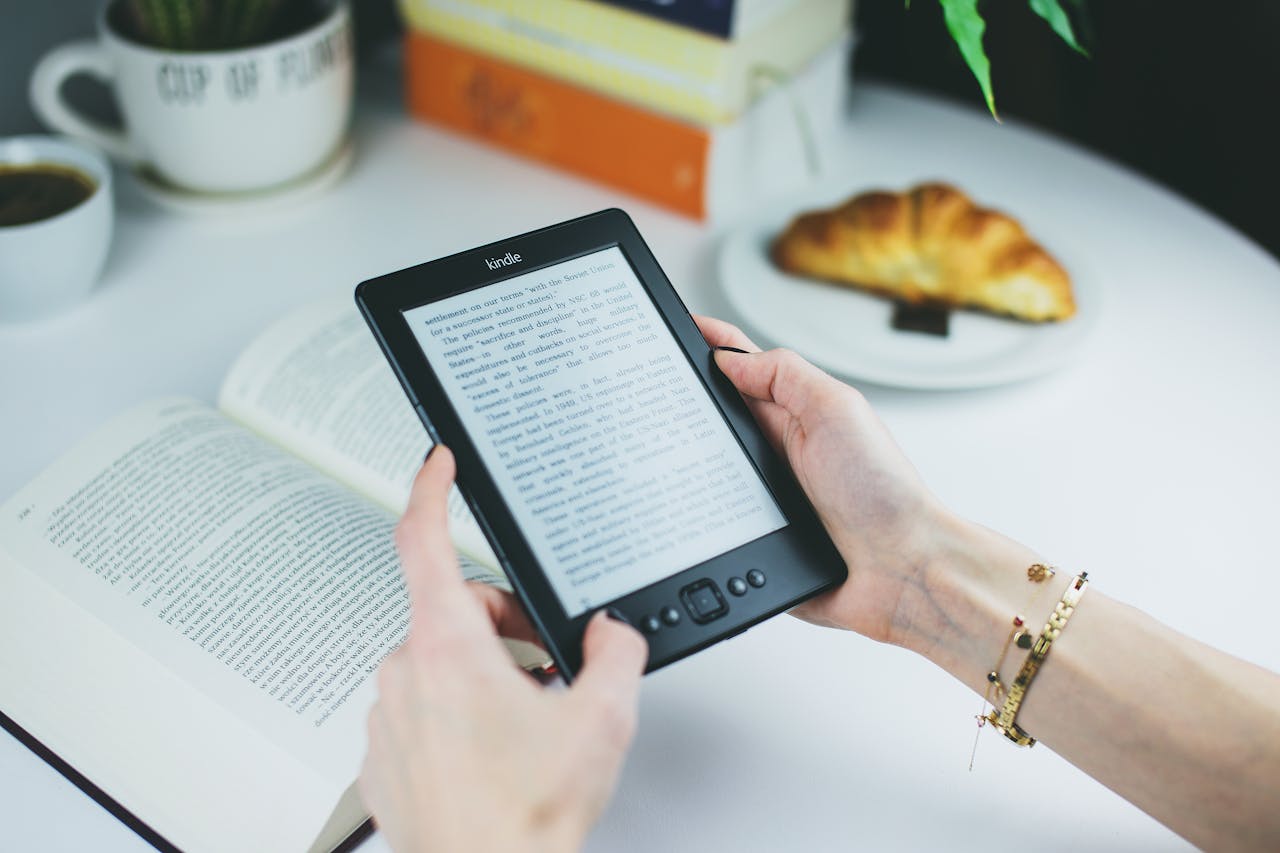
But then came the Amazon Kindle.
It promised to carry an entire library in a device lighter than a single paperback. It promised instant access to any book in the world within seconds.
In the digital wellness community, this created a divide. Purists argue that real books are the only way to truly absorb information. Technophiles argue that the e-reader is the ultimate tool for minimalism.
But this isn’t just about preference. As we try to reclaim our focus in 2026, the real question is about our brains.
Which format actually helps us focus better? Which one helps us remember more? And is it finally time to ditch the paper for good?
Let’s dive deep into the psychology of reading.
Why Paper Wins for Studying
Have you ever tried to recall a quote from a book, and you couldn’t remember the exact words, but you remembered exactly where it was on the page?
“It was on the bottom left, about halfway through the book.”
That is your Spatial Memory at work.
When you read a physical book, you aren’t just processing text; you are navigating a physical landscape. You can feel the weight of the pages you’ve read in your left hand and the weight of the pages yet to come in your right hand.
This tactile feedback gives your brain a sense of progress and permanence. It creates a “mental map” of the book. Research suggests that this “topographic” mapping helps significantly with long-term retention.
When we read on a screen—even a high-quality e-ink screen—we lose these spatial markers. The text becomes a never-ending scroll. Without that physical geography, our brains have a harder time “anchoring” the memories.
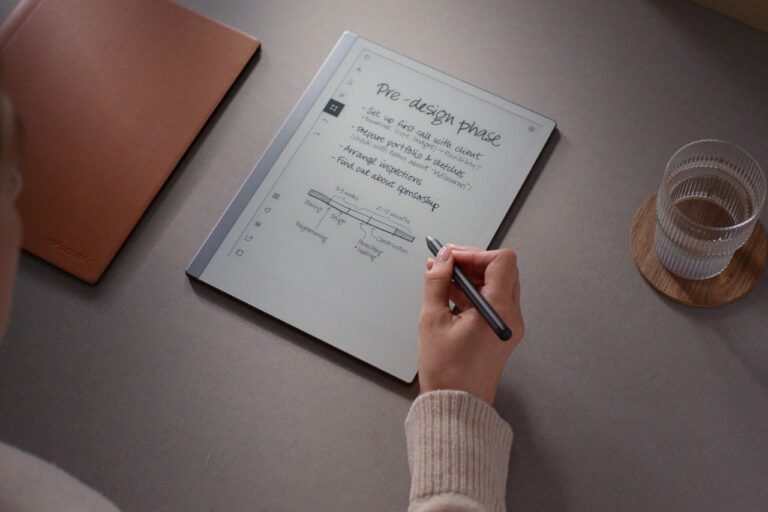
(Note: If you want digital notes with a paper feel, consider a dedicated writing tablet like the ReMarkable 2 instead).
Why Kindle Wins for Habit Building
However, retention isn’t everything. Sometimes, the goal isn’t to study; it’s just to read.
And this is where the physical book often fails.
A hardcover edition of a fantasy novel can weigh two pounds. It’s heavy. It’s clunky. You can’t easily hold it with one hand while standing on a crowded train. You can’t pack three of them in your carry-on bag for a weekend trip without sacrificing space.
This creates Friction. And friction is the enemy of habit.
How many times have you pulled out your phone and started doom-scrolling simply because you didn’t have your book with you?
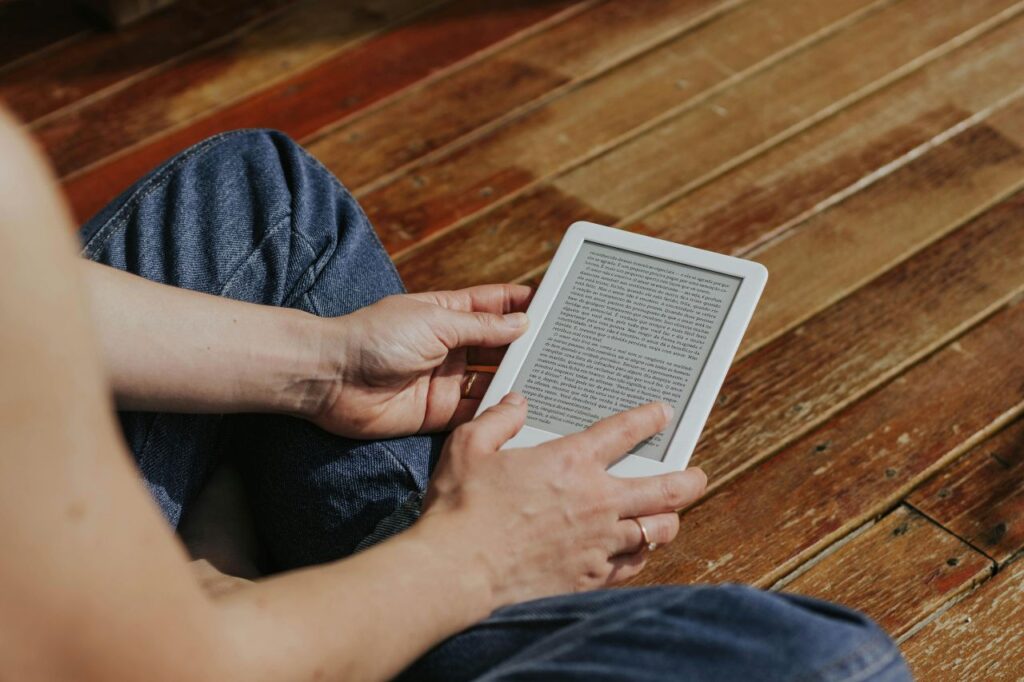
The Kindle Paperwhite solves this problem instantly.
It weighs less than a smartphone. It fits in a jacket pocket. It holds thousands of worlds. Because it removes the friction of “carrying a book,” it drastically increases the opportunity to read.
Suddenly, those 10 minutes waiting at the dentist aren’t spent on Instagram; they are spent reading a novel.
E-Ink vs. Blue Light
One of the biggest arguments against digital devices is Blue Light. We know that staring at an iPad or iPhone before bed destroys melatonin production.
But the Kindle is different.
Unlike a tablet, which blasts backlit light directly into your eyeballs (requiring you to wear Blue Light Glasses to stay safe), the Kindle uses E-Ink technology. The screen itself does not glow.
If you use a light on a Kindle, it is “front-lit,” meaning LEDs shine down onto the screen and reflect back to you—mimicking the physics of a lamp shining on paper.
The newer models (specifically the Kindle Paperwhite 2025/2026 editions) come with a Warm Light feature. This allows you to shift the screen color from a stark white to a soft, amber candle-light orange.
Reading a physical book in bed requires a lamp. That lamp might annoy your partner. It might be too bright. With a Kindle set to “Warm Mode,” you can read in a pitch-black room without waking anyone up.
The Minimalist Perspective: Clutter vs. Identity
There is a beautiful aesthetic to a wall lined with bookshelves. It adds warmth to a room. It signals your identity to visitors. It says, “This is who I am and what I know.”
But let’s be honest: Books are heavy, dusty, and take up a lot of space.
For those trying to live a simpler life, a massive physical library can start to feel like a burden. Moving houses with 20 boxes of books is a nightmare.
The Kindle aligns perfectly with the philosophy of Digital Minimalism. It consolidates physical clutter into a single, sleek slab. It decouples the joy of reading from the burden of ownership.
If you value aesthetics and identity (or want to try Analog Hobbies), go Paper. If you value freedom and clean space, go Kindle.
My Hybrid Strategy: The Best of Both Worlds
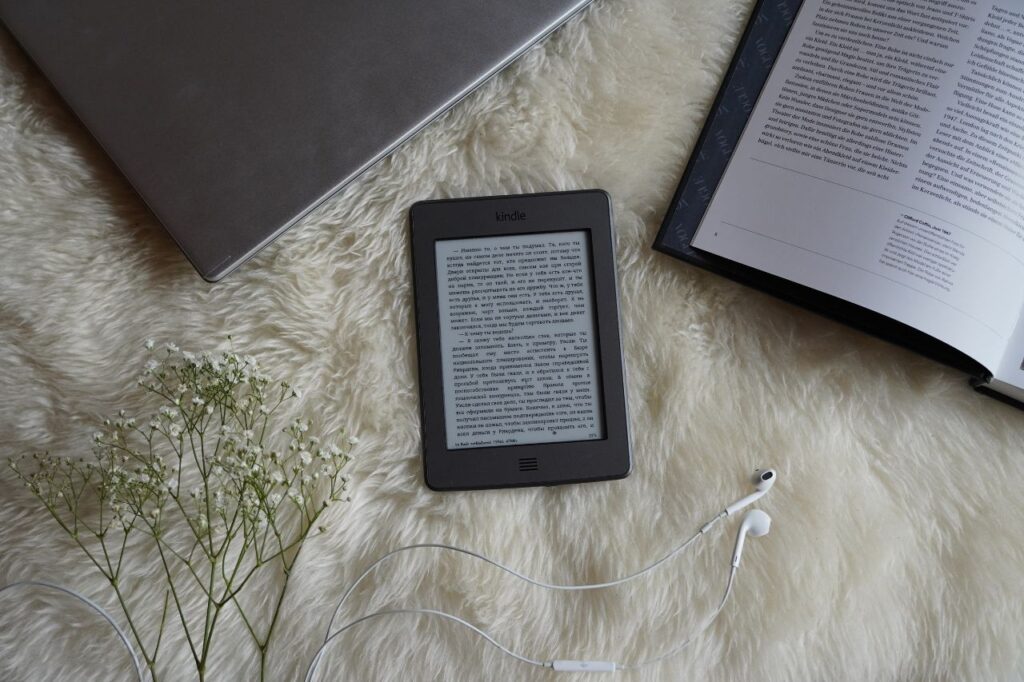
So, which one should you choose?
The most effective readers in 2026 are not purists; they are Hybrids. Here is a common strategy used by heavy readers:
Buy Physical Books If:
- It is a book you want to study deeply (highlight, annotate, dog-ear).
- It is a visual book (art, design).
- It is a classic you want to keep forever.
Buy Kindle Versions If:
- It is fiction, a thriller, or a biography (linear reading).
- It is a massive 800-page book that is too heavy to carry.
- You plan to read it mostly while traveling.
Conclusion: The Medium Doesn’t Matter
At the end of the day, the “Kindle vs. Paper” debate is often just another form of procrastination. We spend so much time debating the tool that we forget to do the work.
In a world constantly fighting for your attention with flashing notifications and algorithmic feeds, the act of reading a long-form text—whether on dead trees or electronic ink—is a radical act of resistance.
If a Kindle helps you read 50 books a year instead of 5, then for you, it is the superior technology. If the smell of paper helps you slow down, then the physical book is the superior technology.
Don’t overthink it. Just pick one up, find a quiet corner, and get lost.