The “Time Density” Trap: Why You Feel Busy But Empty

Here is a paradox I want you to consider.
In 2026, we possess the most powerful time-saving tools in human history.
You can order groceries in thirty seconds. You can send a document to the other side of the world instantly. You can attend a meeting without commuting. You can research a topic that used to take a week in the library in mere minutes.
Logically, we should be swimming in free time. We should be the most relaxed generation to ever walk the earth.
But look around. Do you feel relaxed?
Or do you feel a constant, low-level hum of urgency? Do you feel like your day is a Tetris game where the blocks are falling too fast? Do you feel like you are constantly “catching up” but never arriving?
You are not crazy. And you are not alone.
New research published in 2025 has finally given a name to this phenomenon. It is called “Time Density.”
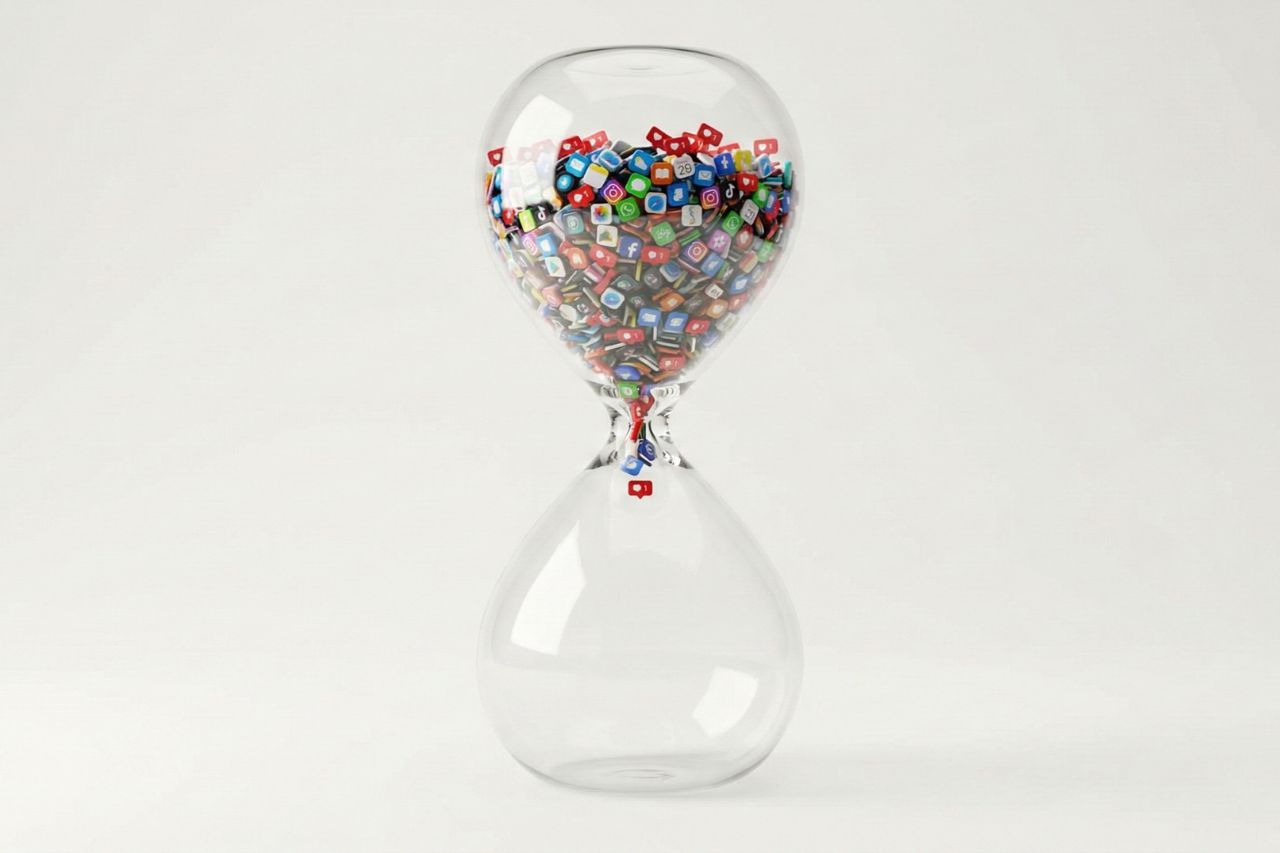
It turns out that digital technology doesn’t just save time. It compresses time. It fills every microscopic gap in our lives with data, tasks, and noise, until the fabric of our day feels suffocatingly tight.
We haven’t run out of hours. We have run out of space.
Hi, I’m Finn Albar.
I used to think my busyness was a sign of importance. Now I know it was a symptom of a design flaw in how I used technology.
Based on groundbreaking new studies from researchers across Europe, here is the science of why your phone is stealing your perception of time, and how to expand your life again.
The Great Lie of Efficiency
We are sold a promise that digital devices enhance our autonomy and flexibility. We are told that apps will reduce time pressure and create an abundance of leisure.
But the reality of 2026 paints a different picture.
A massive qualitative study by Černohorská et al. involving 300 participants across six countries found a consistent theme: People feel that digital technology is costing them time, not saving it.
The study identifies a phenomenon called the “Acceleration Cycle.” While technology speeds up individual tasks, it also amplifies the overall volume of activity.
Because you can reply to an email at 9 PM, you are expected to. Because you can book a doctor’s appointment while walking to the car, you do.
We have used the time we saved to cram in more tasks. We have increased the density of our days. We are doing more things per hour than any humans before us, yet we feel less accomplished.
The Phenomenon of “All Time is Filled”
The most chilling finding from the 2025 research is a theme the scientists labeled “All Time is Filled”.
Think about the “In-Between Moments” of your day. Waiting for the elevator. The three minutes before a Zoom call starts. Sitting on the toilet. Standing in line for coffee.
Ten years ago, these moments were empty. They were boring. They were pauses.
Today, they are filled.
The study found that participants consistently use digital technology to fill time to prevent it from being empty or “dead”. We have a compulsion to make every second “productive” or “entertaining.”
The Death of the Gap
This leads to a sensation that time is becoming “denser”. There are no breaks. There is no mental digestion. When you switch from a spreadsheet to TikTok to an email to a podcast without a single second of silence in between, your brain never resets. You are creating a solid wall of cognitive load from waking to sleeping.
This is why you feel exhausted at the end of the day, even if you didn’t do much physical work. You have subjected your brain to twelve hours of non-stop input without a single breath of output.
The “Time is Forgotten” Effect
Have you ever sat down to check your phone for “five minutes” and suddenly looked up to realize an hour has passed?
The researchers call this “Time is Forgotten”.
Participants in the study described a persistent loss of awareness of the passage of time, particularly when using social media. “You’re sitting there and suddenly find out you’ve been on Instagram for half an hour, and you don’t even know what happened,” one participant noted.
This isn’t accidental. It is structural. The study highlights that Imperfect Algorithms are partly to blame. Because the feed rarely gives you exactly what you want (the perfect satisfaction), you keep scrolling in search of it. The algorithm provides “intermittent reinforcement”—just enough interest to keep you looking, but not enough to satisfy you.
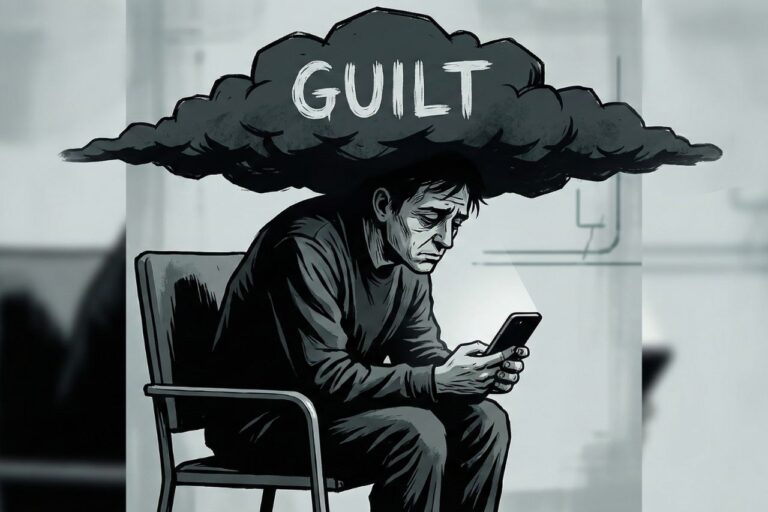
This creates a “Time Leak.” You aren’t enjoying the time. You aren’t resting. You are simply losing time to a trance state. This leads to profound feelings of guilt and regret, a theme the researchers found across all demographics.
The Burden of “Digital Bureaucracy”
We assume technology streamlines life. But often, it just creates new forms of paperwork.
The study identified that time is frequently lost to Inefficiency and Bureaucracy. Think about the number of times you have to:
- Reset a password.
- Update an app.
- Manage cookie consent forms.
- Delete spam emails.
- Clear notifications.
One participant in the German sample noted: “There are then on WhatsApp 334 notifications… that’s already a lot of information that takes up a lot of time”.
We have become janitors of our own digital lives. We spend hours every week just maintaining the tools that are supposed to serve us. This “Admin Debris” clogs up our mental bandwidth, leaving less room for Deep Work.
The Emotional Pacifier Why We Can’t Stop
If this density makes us miserable, why do we do it? Why do we fill every gap?
A separate 2025 study by Bar et al., which analyzed the impact of phone bans in schools, offers a clue. It turns out, the device is not just a tool; it is a Security Blanket.
Students in the study reported that without their phones, they felt a loss of ability to regulate their emotions. They used phones to “escape” from stress, anxiety, or awkward social situations.
We adults are no different. We pull out our phones in the elevator not because we need information, but because we feel awkward standing in silence with strangers. We check email at dinner not because we are productive, but because we are anxious about work.
The phone has become our Digital Pacifier. We use it to soothe ourselves. But by doing so, we rob ourselves of the resilience that comes from sitting with our own thoughts. We lose the ability to just be.
The Consequences of Density
Living a life of maximum time density has costs that go beyond being “busy.”
- Loss of Autonomy: The study found that participants felt a strong need to “Reclaim Time” because they felt their time was being stolen by apps designed to capture attention. You stop being the pilot of your life and become a passenger.
- Erosion of Authenticity: Participants expressed a belief that digital time was “less authentic” or valuable than real-world time. A hour spent scrolling feels “wasted,” while an hour spent walking feels “earned.”
- Chronic Stress: Time pressure is directly linked to increased cortisol levels. Living in a state of perpetual density keeps your body in Fight or Flight mode.
How to De-Densify Your Life
You cannot add more hours to the day. But you can expand the hours you have by reducing their density.
Here is how to reintroduce “Space” into your timeline.
1. Reclaim Micro-Boredom
This is the most important habit. Stop filling the gaps. When you are waiting for the kettle to boil, just wait. When you are walking to the car, just walk. The researchers suggest that we need to accept “doing nothing” as a valid activity. These tiny pockets of silence allow your brain to enter the Default Mode Network, which is essential for creativity. (Read more in our guide on The Benefits of Boredom).
2. The “Authenticity” Filter
The study found that users felt less guilt when they engaged with “Good” digital time—activities that required commitment or offered intellectual growth, like podcasts or audiobooks. Audit your consumption.
- High Density/Low Value: TikTok, Reels, News Feeds (Eliminate these).
- Low Density/High Value: Long-form articles, Albums, Cinema (Keep these).
3. Create “Friction”
The study by Schraggeová (2025) proved that adding friction reduces habitual usage significantly. Make it harder to fill the gaps.
- Use a Minimalist Launcher to hide icons.
- Use a Dumbphone on weekends to physically remove the option of filling time.
- Turn on Grayscale Mode to make the screen less stimulating.
4. Single-Tasking
The study noted that density often comes from doing multiple things at once—watching TV while scrolling. Stop layering your time. If you watch a movie, just watch the movie. If you eat, just eat. This lowers the density of data input and allows you to actually savour the experience.
You Need Emptiness
We are terrified of emptiness. We think an empty schedule means we are lazy. We think an empty mind means we are boring.
But emptiness is not a defect. Emptiness is luxury.
Space is where you process your emotions. Space is where you remember who you are. Space is where you rest.
The research is clear: The relentless pursuit of filling every second is backfiring. It is making us feel poorer, not richer.
So, do yourself a favor today. Create a gap. And then, dare to leave it empty.
Further Reading

Černohorská, V., et al. (2025). "How digital technology can steal your time." Published in Computers in Human Behavior. Read the study here

Bar, E., et al. (2025). "Student perspectives on banning mobile phones in South Australian secondary schools: A large-scale qualitative analysis." Published in Computers in Human Behavior. Read the study here