The Short-Form Video Effect: Why We Can’t Focus on Long Movies Anymore

Picture this scenario.
It’s Friday night. You sit down to watch a movie you have been excited about for months. It is a critically acclaimed masterpiece—maybe it’s Oppenheimer or Dune. You press play.
Ten minutes later, there is a slow dialogue scene. Without even thinking, your hand reaches for your phone. You check Instagram. You reply to a text. You look up the actor on Wikipedia.
Suddenly, you realize you have missed a crucial plot point. You rewind. Five minutes later, you do it again. By the end of the movie, you feel like you barely watched it.
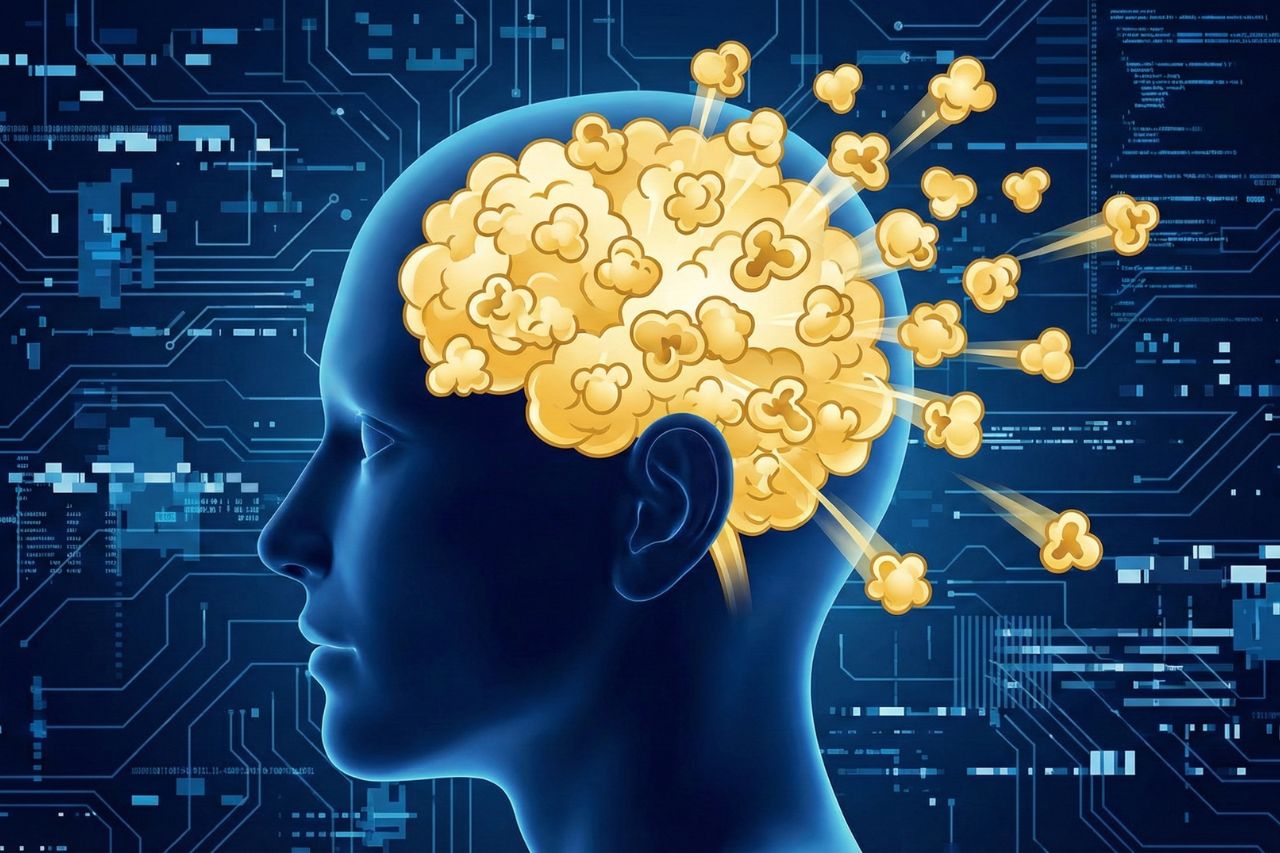
You are not alone. This phenomenon has a name. It is called “Popcorn Brain.”
First coined by researcher Dr. David Levy, the term describes a brain so accustomed to the constant popping and flashing of digital stimulation that it struggles to handle the slow pace of real life.
In 2026, with the dominance of TikTok, Reels, and YouTube Shorts, our collective attention span has been shattered. We are trading depth for speed.
But here is the good news: Your brain is plastic. You can retrain it. Here is the science behind why your attention is fragmented, and the exact protocol to fix it.
The “TikTok-ification” of the Brain
To understand Popcorn Brain, we have to look at how short-form content is engineered.
A 15-second video is a masterclass in dopamine efficiency. It provides a setup and a punchline (or a visual payoff) instantly. If the first second doesn’t grab you, you swipe. This creates a Hyper-Feedback Loop.
Every time you swipe and find something interesting, your brain gets a hit of dopamine. Every time you swipe and see something boring, you swipe again instantly to find the next hit.
This trains your brain to expect Instant Gratification.
The Problem with “Slow” Content
When you switch from TikTok to a 2-hour movie, your brain goes into withdrawal. A movie requires Delayed Gratification. It asks you to invest 30 minutes of attention in character development before giving you the emotional payoff.
To a Popcorn Brain, this “waiting time” feels like torture. Your brain screams: “Nothing is happening! Swipe! Skip! Check the phone!”
This isn’t just about movies. This inability to tolerate “slow” moments destroys our ability to do Deep Work, read complex books, or hold deep conversations.
Do You Have Popcorn Brain?
It’s not just about checking your phone during a movie. Here are the subtle signs that your attention span has eroded:
- The “Double Screen” Habit: You physically cannot watch TV without also scrolling on your phone. You need two streams of information just to feel stimulated.
- The “2x Speed” Addiction: You listen to podcasts or watch YouTube videos at 1.5x or 2x speed because normal human speech feels “too slow.”
- The Reading Block: You used to read novels in a day, but now you struggle to finish a single chapter without your mind wandering.
- The Tab Juggling: You have 20 tabs open on your browser and constantly switch between them, never finishing one article before starting another.
If this sounds like you, your dopamine baseline is too high. You need to recalibrate.
How to Retrain Your Attention
You cannot fix this overnight. You have to treat your attention span like a muscle that has atrophied. You need to start with light weights and build up.
Here is a 3-step training program to cure Popcorn Brain.
Step 1: The Single Screen Rule
This is the most important rule. Never use two screens at once.
If you are watching a movie, the phone must be in another room (or at least out of arm’s reach). If you are watching a YouTube video on your laptop, put the phone face down.
Why it works:
It forces Mono-Tasking. When the movie gets slow, you will feel the urge to reach for your phone. Since the phone isn’t there, you will have to sit with that boredom. You will have to endure the slow moment. Eventually, that boredom will pass, and you will re-engage with the story. You are teaching your brain that “slow” does not mean “bad.”
Step 2: Practice Active Watching
Passive consumption creates a wandering mind. Active consumption creates focus.
When you watch a movie or read a book, try to engage with it intellectually.
- Ask yourself: “Why did the director choose this camera angle?”
- Predict: “What is the character going to do next?”
- Analyze: “What is the theme of this scene?”
By giving your brain a job to do within the content, you satisfy its need for stimulation without leaving the activity.
Step 3: Progressive Overload
Don’t start with a 3-hour black-and-white Russian drama. You will fail. Start small.
- Week 1: Watch a 20-minute episode of a sitcom without touching your phone.
- Week 2: Watch a 45-minute drama episode without touching your phone.
- Week 3: Watch a 90-minute movie.
- Week 4: Read a Physical Book for 30 minutes straight.
Treat it like gym reps. If you fail, reset and try again.
The Role of Your Environment
Your environment dictates your focus. If your phone is sitting face-up on the coffee table, you will pick it up. The visual cue is too strong.
Create a “Phone Bowl”:
Put a bowl in your entryway or kitchen. When you decide to watch a movie or read, drop your phone in the bowl. The physical act of walking to the bowl to check your phone adds Friction. That friction gives your rational brain enough time to say, “No, I’m watching a movie right now.”
(For extreme cases, use a physical lock box or install an App Blocker that locks your social media apps for the duration of the movie).
Depth is Where Meaning Lives
Why does this matter? Why not just enjoy the TikToks?
Because the best things in life require depth. Complex ideas require deep reading. meaningful relationships require deep listening. Mastery of a skill requires deep practice.
If you lose the ability to handle “slow” and “boring,” you lose access to the deepest parts of the human experience. You become a skimmer, surfing the surface of life but never diving in.
Curing Popcorn Brain isn’t just about watching movies better. It’s about reclaiming your ability to think deeply.
Tonight, challenge yourself. Pick a movie. Put the phone in the other room. And watch it—really watch it—from start to finish.
You might be surprised at how much you’ve been missing.