Feed Cleanse vs. Time Limit: What Actually Works?

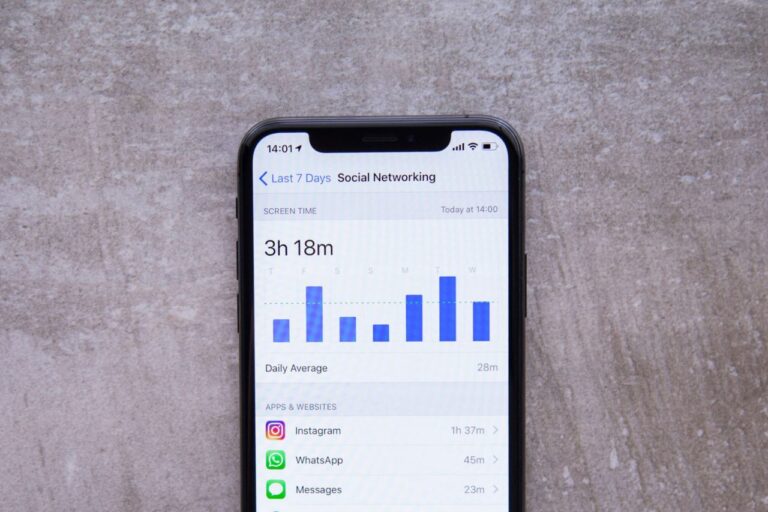
Open your phone settings right now. Go to “Screen Time” or “Digital Wellbeing.”
What do you see?
You likely see a graph showing how many hours you spent on your phone. You might see a feature that allows you to set a “Time Limit” for Instagram or TikTok—maybe 30 minutes a day, maybe an hour.
For the last decade, this has been the gold standard of digital advice: “If you want to feel better, spend less time on your phone.”
We treat digital consumption exactly like we treat calories. We think that if we just restrict the quantity, we will be healthy. We set timers. We use apps to lock us out. We feel guilty when we hit “Ignore Limit” for the third time today.
But what if we have been measuring the wrong thing?
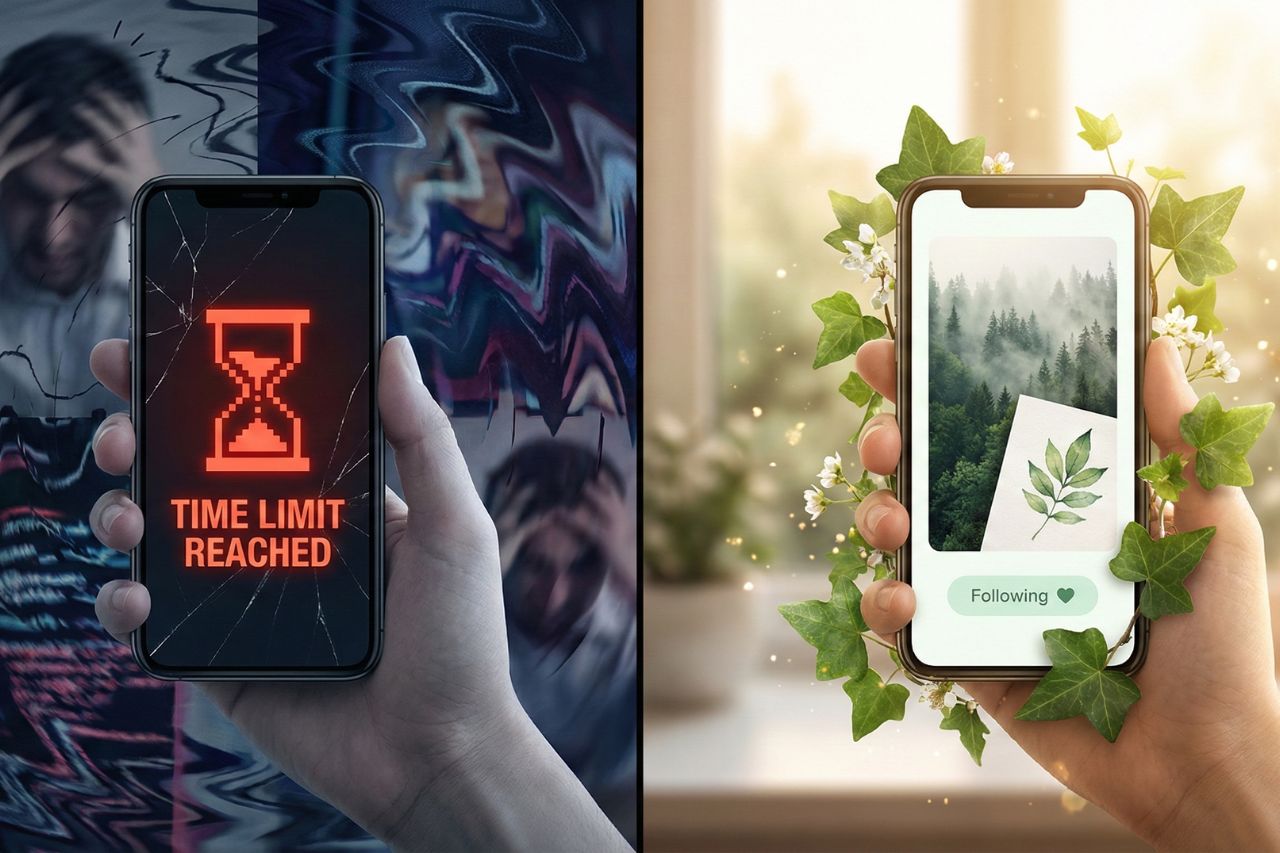
What if 3 hours of looking at art, nature, and inspiring friends is actually healthier for your brain than 15 minutes of looking at toxic beauty standards, rage-bait news, and people arguing?
A groundbreaking new study published in 2025 has turned the conventional wisdom on its head. Researchers have finally compared the effectiveness of “Limiting Time” versus “Cleaning the Feed.”
The results are clear: It is not just about how long you scroll. It is about what you scroll past.
Hi, I’m Finn Albar.
I used to be obsessed with getting my screen time under 2 hours a day. I treated it like a high score. But I still felt anxious. I still felt inadequate.
It wasn’t until I stopped counting minutes and started auditing my “Following” list that my mental health actually shifted.
Here is the science behind why your “App Limits” are failing you, and why a “Feed Cleanse” is the superior strategy for 2026.
The Study: The Three Detox Strategies
In early 2025, a team of researchers led by Veya Seekis and Kate Mulgrew published a study titled “To detox or not to detox?” in the journal Body Image.
They wanted to answer a simple question: Which digital detox strategy actually improves mental wellbeing and body image?
They recruited 175 young women (a demographic highly susceptible to social media harm) and split them into four distinct groups for a 7-day experiment:
- The Break Group (Abstinence): They were told to stop using Instagram and TikTok completely for one week.
- The Time-Cap Group (Restriction): They were allowed to use the apps, but limited to 30 minutes per day.
- The Cleanse Group (Curation): They could use the apps as much as they wanted, but they had to unfollow any accounts that made them feel bad about their appearance (influencers, models, beauty brands) and follow positive accounts instead (travel, nature, hobbies).
- The Control Group: They used social media as usual.
They measured the participants’ Appearance Satisfaction, Positive Mood, and Wellbeing before and after the week.
The results were not what most productivity gurus would expect.
Why Time Limits Fail (The “Diet” Trap)
We have all tried the “30-Minute Rule.” You tell yourself you will only check TikTok for half an hour.
The study found that while the Time-Cap Group did reduce their usage, they did not see the same significant boost in appearance satisfaction compared to the other groups.
Why?
1. The Concentration of Toxicity
Imagine you are eating poison. Does it matter if you eat it for 30 minutes or 60 minutes? It is still poison. If your feed is filled with content that makes you feel inadequate, insecure, or angry, even a short exposure is damaging. In fact, knowing you only have 30 minutes might make you scroll faster, consuming that toxic content with higher intensity.
2. The “Forbidden Fruit” Effect
Psychologically, a time limit feels like a diet. It feels like deprivation. When the app locks you out, you feel a spike of frustration. You want what you can’t have. This creates a negative relationship with the device. Instead of feeling empowered, you feel restricted.
3. The Rebound
We have discussed this in our article on App Blockers. When you rely solely on willpower or soft limits, you are fighting a constant battle. If you hit the limit but you are stressed, you will likely override it, leading to feelings of guilt and failure.
The Power of the “Feed Cleanse”
Now, look at the Cleanse Group.
These participants didn’t stop using social media. They didn’t count their minutes. They simply changed their environment.
The study found that the Cleanse Group experienced a significant improvement in Appearance Satisfaction and positive mood, comparable to the group that quit social media entirely.
This is a massive finding. It proves that you can stay online and still feel good, provided you take control of the input.
Why It Works:
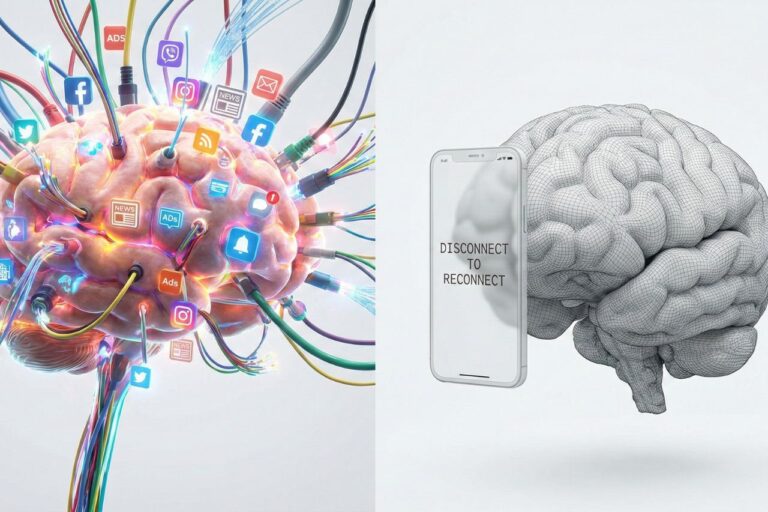
The Cleanse shifts the mechanism from “Deprivation” to “Nourishment.” By unfollowing accounts that trigger social comparison (e.g., idealized bodies, luxury lifestyles) and replacing them with neutral or inspiring content (e.g., art, animals, analog hobbies), you change the hormonal response of your brain.
Instead of triggering cortisol (stress/envy), your feed triggers oxytocin (connection) or curiosity.
You are not fighting the algorithm; you are retraining it.
The “Break” (Abstinence): Effective but Hard
The study confirmed that the Break Group (Total Detox) also saw great results.
If you stop looking at perfect Instagram models, you stop judging your own body. It is simple cause and effect.
However, as we discussed in our Manifesto, total abstinence is hard to sustain.
- You miss events.
- You lose contact with friends.
- You feel isolated.
The “Feed Cleanse” offers a middle ground. It gives you the mental health benefits of a detox without the social isolation of quitting. It is the sustainable, long-term solution for living in a digital world.
The Mechanism: Social Comparison Theory
Why does the content matter so much more than the time?
It comes down to Social Comparison Theory. Humans are hardwired to evaluate themselves by comparing their status to others. In the Stone Age, you compared yourself to the 50 people in your tribe. You were probably “good enough.”
On Instagram, you compare yourself to the top 0.1% of the human population—the richest, fittest, and most beautiful people on earth, filtered and edited to perfection.
When you expose your brain to this “Supernormal Stimulus,” your self-esteem crashes.
A “Time Limit” doesn’t fix this. Seeing a supermodel for 5 seconds still triggers the comparison. A “Cleanse” removes the stimulus entirely.
How to Perform a “Feed Cleanse” (Step-by-Step)
You don’t need to wait for a study to tell you what to do. You can replicate the results of the “Cleanse Group” today.
Here is the protocol for a 7-Day Feed Audit:
Step 1: The “Vibe Check” (Day 1)
Open your social media app of choice. Scroll for 10 minutes. For every single post you see, ask yourself one question: “How does this make me feel?”
- Does it make you feel informed?
- Does it make you laugh?
- Does it make you feel inspired?
- OR: Does it make you feel jealous? Anxious? “Less than”?
Listen to your body. If you feel a tightness in your chest or a drop in your mood, that account has to go.
Step 2: The Ruthless Unfollow (Days 2-3)
Go to your “Following” list. Be aggressive.
- Unfollow: Influencers who make you feel poor or ugly. News accounts that post rage-bait. Brands that try to sell you insecurities.
- Mute: Friends or family members who post annoying content but who you can’t unfollow for social reasons. (They won’t know you muted them).
Don’t worry about “missing out.” If it is important, you will find out another way.
Step 3: The “Nourish” Phase (Days 4-7)
Now, fill the void. You need to tell the algorithm what you want to see. Follow accounts that align with your real interests and Analog Hobbies.
- Follow a pottery account.
- Follow a hiking account.
- Follow a history account.
- Follow a “Slow Living” account.
Suddenly, your feed transforms. It becomes a magazine you curated, not a billboard that assaults you.
When to Use Time Limits
Does this mean Time Limits are useless? No.
Time Limits (and App Blockers) are still essential for Productivity. Even if your feed is full of puppies and art, scrolling for 4 hours will still kill your work day. You still need boundaries to protect your Deep Work.
But for Mental Health? For body image? For anxiety? The limit doesn’t save you. The content does.
Use Time Limits to protect your schedule. Use Feed Cleansing to protect your soul.
You Are the Editor
We often feel like victims of the algorithm. We feel like the content is “happening” to us.
But you are not a passive observer. You are the Editor-in-Chief of your own media consumption.
The 2025 study proves that you have the power to change how social media affects your brain without throwing your phone in the river.
You can curate a digital environment that supports you rather than drains you.
So, stop obsessing over whether you spent 45 minutes or 55 minutes on your phone today. Instead, ask yourself: “Was that time spent looking at things that made me better, or things that made me bitter?”
Clean your feed. The time will take care of itself.
Further Reading
Seekis, V., et al. (2025). "To detox or not to detox? The impact of different approaches to social media detox strategies on body image and wellbeing." Published in Body Image. Read the study here

Bar, E., et al. (2025). "Student perspectives on banning mobile phones in South Australian secondary schools: A large-scale qualitative analysis." Published in Computers in Human Behavior. Read the study here

Allcott, H., et al. (2022). "Digital Addiction." Published in American Economic Review. Read the study here