Silent Walking Guide: Benefits for Mental Health & Focus

Here is a scenario that probably feels familiar.
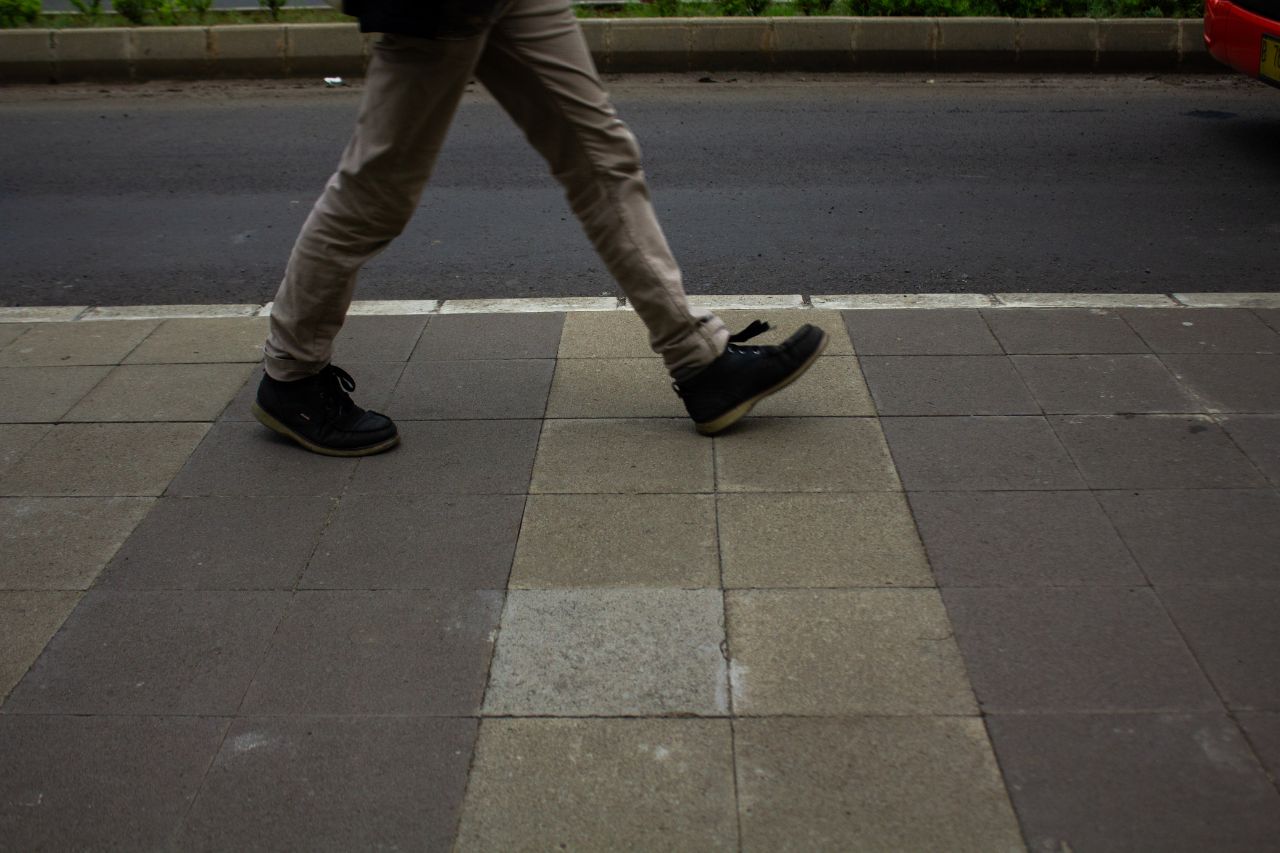
You decide to go for a walk. Maybe you need coffee, or maybe you just need to close your activity rings. You put on your shoes. You grab your keys. And then, you spend three minutes untangling your earbuds or searching for the perfect podcast episode.
The idea of walking out the door without listening to something feels… wrong. It feels like wasted time. Why just walk when you could be “learning” from a podcast or “vibing” to a playlist?
In 2026, we have developed a phobia of silence. We treat every unfillable moment of our day as a void that must be stuffed with audio content.
But a counter-movement is rising. It’s called Silent Walking.
It is exactly what it sounds like. No AirPods. No music. No audiobooks. Just you, your feet, and your uncurated thoughts.
It sounds boring. It sounds painful. But neuroscientists and mental health experts are calling it one of the most powerful tools we have to reset our overstimulated brains.
Here is why you should leave the headphones at home, and what happens to your brain when you finally press stop.
The Problem: “Input Overload”
To understand why Silent Walking is necessary, we have to look at our daily diet of information.
From the moment we wake up to the moment we sleep, we are in Input Mode. We are consuming emails, texts, news, videos, and music. We are constantly stuffing data into our brains.
But the brain needs Output Mode (or Processing Mode) to make sense of all that data.
Think of your brain like a stomach. If you keep eating food without pausing to digest, you will get sick. Similarly, if you keep consuming information without pausing to think, you get “Mental Indigestion.” This manifests as anxiety, brain fog, and a lack of original ideas.
We use podcasts and music to drown out our own thoughts because sometimes, our thoughts are anxious or boring. But by drowning them out, we never process them. We just push them down, where they fester.
Entering the “Default Mode Network”
I have written before about the Benefits of Boredom, and Silent Walking is the practical application of that science.
When you walk without distraction, your brain isn’t “doing nothing.” It switches from the “Executive Attention Network” (focusing on a task) to the Default Mode Network (DMN).
The DMN is responsible for:
- Autobiographical Planning: Figuring out who you are and where you are going in life.
- Consolidation: Moving information from short-term to long-term memory.
- Creative Association: Connecting two unrelated ideas to solve a problem.
Have you ever noticed that your best ideas come to you in the shower? That’s because the shower is one of the few places left where you can’t use a phone. Silent Walking turns your neighborhood stroll into a 30-minute “shower thought” session.
What Happens on a Silent Walk?

If you have been glued to audio content for years, the first Silent Walk will be uncomfortable. Here is the typical timeline of a 30-minute session.
Minutes 0-5: The Resistance
You step outside. It feels too quiet. You hear the traffic. You feel self-conscious. Your brain screams, “This is boring! I should be listening to that business podcast!” You will feel a phantom urge to reach for your phone. Advice: Push through. This is the Dopamine Detox phase.
Minutes 5-15: The Chatter
Once the urge to distract yourself fades, the “Brain Chatter” starts. You will think about your todo list. You will replay an awkward conversation from 2018. You will worry about work. This is the “Mental Digestion” happening. Let the thoughts come, acknowledge them, and let them go. You are processing your backlog of emotions.
Minutes 15-30: The Clarity
This is the sweet spot. The chatter quiets down. You start noticing the physical world—the way the light hits the leaves, the architecture of a building, the sound of the wind. And then, seemingly out of nowhere, Ideas start to bubble up. Solutions to problems you didn’t know you were solving. A sudden feeling of gratitude. A sense of calm.
You return home feeling lighter, not because you exercised, but because you finally listened to yourself.
How to Start
You don’t need expensive gear. In fact, the goal is to remove gear.
- The “No-Headphone” Rule. Leave them at home. Don’t even bring them “just in case.” If they are in your pocket, you will use them.
- The Phone Dilemma. Ideally, leave your phone at home. If you need it for safety or Apple Pay, put it on “Do Not Disturb” and bury it deep in your bag or a zippered pocket. Do not hold it in your hand. If you hold it, you will check it.
- The Wristwatch Hack. One of the main reasons we check our phones is to see the time (which leads to seeing notifications). Buy a simple, cheap wristwatch. A classic Casio or a basic analog watch. This allows you to check the time without opening the Pandora’s box of the internet.
- Start Small. Don’t aim for a 2-hour hike. Start with a 15-minute walk around the block. Treat it like a meditation practice.
The Safety Benefit
Aside from mental health, there is a practical argument for Silent Walking: Safety.
Walking through a city with noise-canceling headphones is objectively dangerous. You can’t hear cars, cyclists, or people approaching you. Silent Walking restores your situational awareness. You are present in your environment. You are harder to surprise. You move through the world with intention, not in a bubble.
Reclaim Your Inner Monologue
In 2026, silence is a luxury good.
Advertisers, algorithms, and creators are fighting a war for your ears. They want to fill every millisecond of your day with noise because noise generates revenue.
Reclaiming your silence is an act of rebellion.
It sends a message to your brain that your own thoughts are worth listening to. It tells your subconscious that you don’t need constant entertainment to be okay.
So, tomorrow morning, grab your shoes. Leave the AirPods on the charger. Step out the door.
The world is quieter than you think, and your mind is louder than you realize. It’s time to listen to it.