The PauseGadget Manifesto: Why We Don’t Quit Tech, We Just Press Pause


You are tired.
Not physically tired. Mentally drained. You check your phone when you wake up, you check it in the elevator, and you check it while watching a movie. You feel phantom vibrations in your pocket. You close an app, stare at the screen for two seconds, and instinctively open the exact same app again.
It is not your fault. And you are not lazy.
You are fighting against billion-dollar algorithms designed by the smartest engineers in the world. They have turned a communication device into a glowing rectangle of endless dopamine. A slot machine in your pocket.
You already know this. You’ve probably tried to fight it.
The Myth of the Digital Monk
When we realize we are spending 8 hours a day on screens, our first instinct is extreme: “I’m going to throw my smartphone in the river, delete all social media, and live like a monk in the woods.”
It works for three days. Then, reality hits.
You need WhatsApp to talk to your family. You need Google Maps to find a restaurant. You need Spotify for your commute, and email for your boss. Going “cold turkey” on technology is a privilege most modern professionals simply do not have.
So, if we can’t quit technology, what do we do?
Welcome to Intentional Friction
At PauseGadget, we believe the problem isn’t technology itself. The problem is that modern technology has become too frictionless.
It is too easy to scroll for two hours. It is too easy to consume garbage. It is too easy to be distracted.
The solution is not to become a Luddite. The solution is Intentional Friction. You need to design a tech setup where doing the right thing is easy, and falling into digital black holes is incredibly annoying.
That is what we do here. We are your guide to the quiet side of the internet.
The Three Pillars of the Pause
We don’t care about the latest iPhone camera or how fast a new processor benchmark is. We review gear based on one metric: Does it respect your attention?
We focus our reviews and guides on three core areas:
1. Dumbphones & Minimalist Hardware Sometimes, the best upgrade is a downgrade. We test and review feature phones, E-Ink devices, and transition phones. We look for devices that are great at calling and texting, but terrible at endless scrolling.
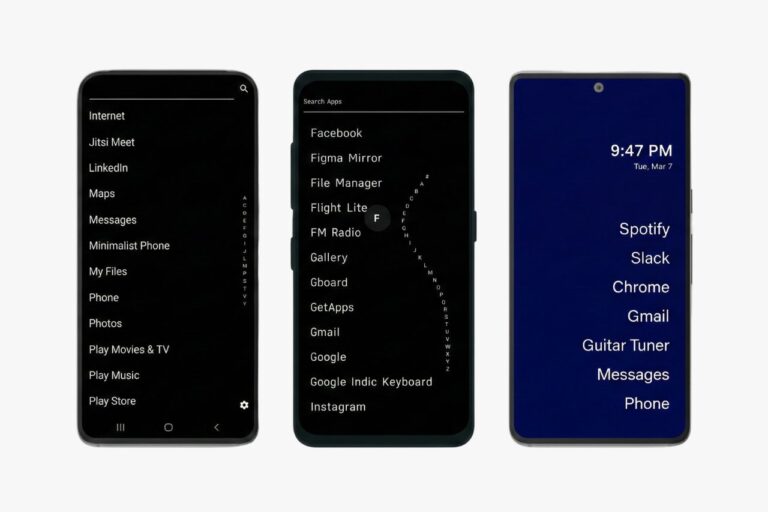
2. Digital Tools & Focus Software Can’t ditch your flagship smartphone? That’s fine. We review the most aggressive app blockers, the cleanest minimalist Android launchers, and the best focus software to tame the device you already own.
3. Analog Living Reclaiming your time means you need to rediscover the physical world. We explore high-quality analog gear—from smart alarm clocks that banish your phone from the bedroom, to premium paper planners and mechanical keyboards designed for deep, uninterrupted work.
The Bottom Line
Technology is a tool. When you are done using a hammer, you put it back in the toolbox. You don’t stare at the hammer for three hours.
It is time to treat our screens the same way.
If you are ready to reclaim your focus, reduce your screen time, and build a setup that actually serves you, you are in the right place.
Welcome to PauseGadget.
Disclaimer: PauseGadget is an independent tech review site dedicated to digital minimalism and productivity. We explore the philosophy of screen time and intentional living. The content provided is for informational purposes only and is not intended as a substitute for professional medical or psychological advice.