Inbox Zero is a Myth: How to Manage Email Without Stress

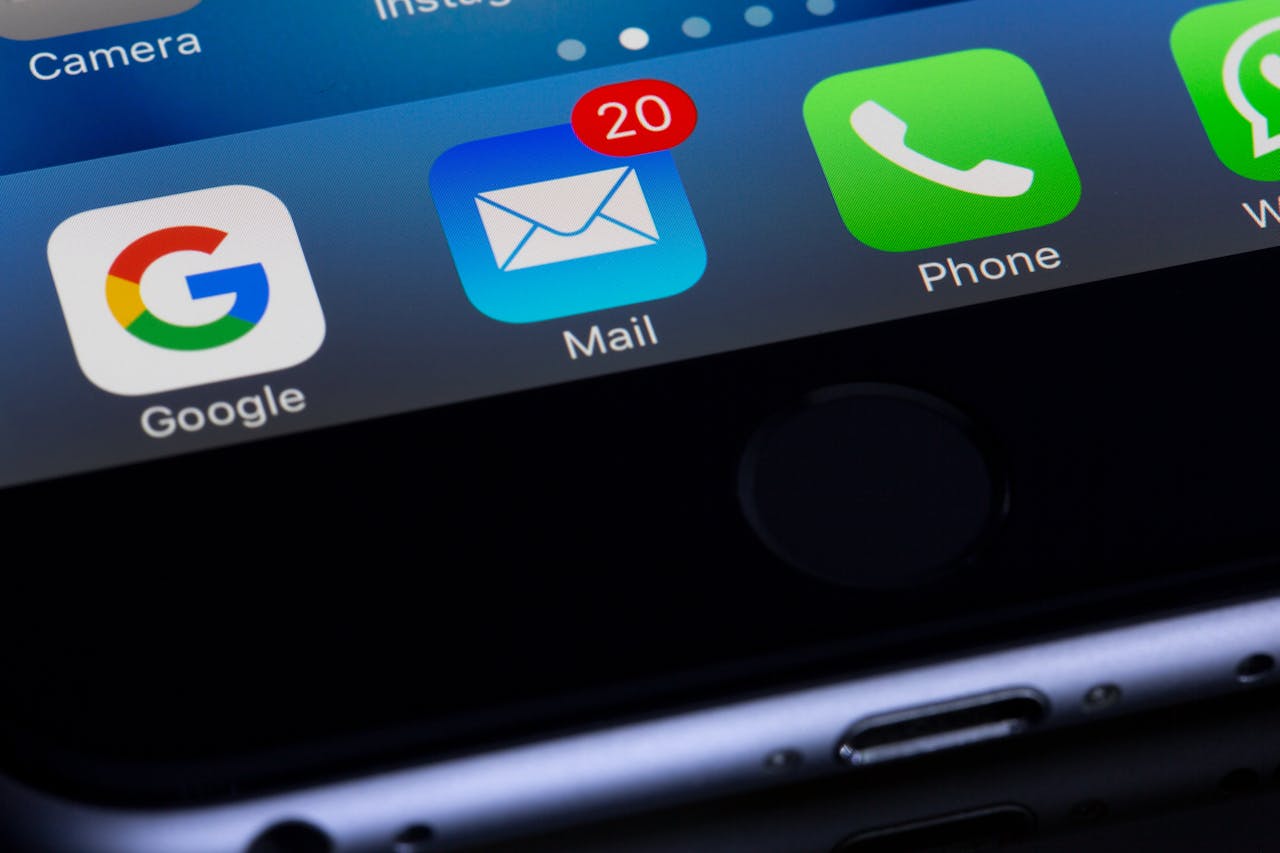
There is a specific kind of anxiety associated with the “Unread” badge.
You open your phone. You see that little red circle with the number “142” sitting on top of your mail app. Your stomach drops. You feel behind. You feel like you are failing before you have even started your day.
For the last two decades, productivity gurus have sold us a promise called “Inbox Zero.”
The idea is seductive: If you can just process, delete, and archive every single message until your screen is blank, you will finally find peace. You will be organized. You will be “on top of things.”
But here is the truth in 2026: Inbox Zero is a trap.
It is a game you cannot win. It is like trying to sweep leaves while a hurricane is blowing. The moment you clear it, three new messages arrive.
Pursuing an empty inbox doesn’t make you productive; it makes you a professional email filer. It tricks you into doing “Shallow Work” all day instead of the work that actually matters.
If you are drowning in email, the solution isn’t to swim faster. The solution is to get out of the pool. Here is a saner approach to email management that prioritizes your mental health over an empty screen.
Why Email is Addictive
Why do we check our email 50 times a day?
It’s not because we love work. It’s because email operates on a Variable Reward Schedule—the exact same psychological mechanism as a slot machine.
Most emails are junk (no reward). Some are stressful bills (negative reward). But occasionally, there is a “Good” email—a new client, a compliment from a boss, an invitation to a party (positive reward).
Because we don’t know when the good email is coming, we keep pulling the lever. We keep refreshing. This creates a dopamine loop that keeps us tethered to the inbox, terrified that if we look away for an hour, we might miss the jackpot.
The “Context Switching” Tax
The real cost of email isn’t the time it takes to read a message (maybe 30 seconds). The cost is Context Switching.
Sophie Leroy, a business professor, coined the term “Attention Residue.” When you switch from Task A (writing a report) to Task B (checking an email), your brain doesn’t switch instantly. A part of your attention remains stuck on the email you just read.
Even if you just “glance” at your inbox for 10 seconds, it takes your brain an average of 23 minutes to fully refocus on your original task.
If you check your email every 20 minutes, you are mathematically incapable of doing Deep Work. You are perpetually working in a state of semi-distraction.
“Batching” (The 3-Times-a-Day Rule)
The most effective way to cure email addiction is Batching.
Treat email like laundry. You don’t wash every single pair of socks the moment you take them off. You wait until you have a pile, and then you do a load.
You should process email in batches.
The Protocol: Close your email tab. Turn off notifications on your phone. Only open your inbox during these three specific windows:
- The Morning Triage (10:00 AM): Note that I didn’t say 8:00 AM. Spend the first two hours of your day doing your own work. Then, open email for 30 minutes. Scan for emergencies. Reply to the urgent stuff. Close it.
- The Post-Lunch Clear (1:00 PM): This is usually when energy is low. It’s a great time for “Shallow Work.” Spend 30 minutes clearing out the backlog.
- The End-of-Day Wrap (4:30 PM): Reply to anything left over so you can close your computer with a clear mind.
Why this works: By grouping the task, you minimize the “Context Switching Tax.” You enter “Email Mode” once, blast through it, and then leave.
OHIO (Only Handle It Once)
When you are in your “Email Mode,” you need to be ruthless.
Most people open an email, read it, think “I’ll deal with this later,” and close it. Then they open it again three hours later. Then again the next day. They read the same email five times but never act on it.
Adopt the OHIO Rule: Only Handle It Once.
When you open an email, you must make a decision immediately. You have four choices (The 4 Ds):
- Delete/Archive: Is this junk? Or just an “FYI”? Archive it immediately. Get it out of sight.
- Delegate: Is this someone else’s job? Forward it immediately.
- Do: Does it take less than 2 minutes to reply? Do it right now. Don’t save it.
- Defer: Will this take 20 minutes to answer? Do not leave it in the inbox. Move it to a “To Do” folder or add it to your task manager, then Archive the email.
Your inbox is not a To-Do list. It is a delivery mechanism. Once the package is delivered, throw away the box.
Use Friction to Your Advantage
If you find yourself unconsciously opening your email app just because you are bored, you need to add friction.
On Your Phone: Delete the Gmail/Outlook app. I know, this sounds extreme. But do you really need to read PDFs on a 6-inch screen? If you absolutely must have email on your phone, bury the app in a folder on the last page, or turn off all notifications. Use Focus Modes to ensure email cannot buzz you after 6 PM.
On Your Computer: Use a tool like Freedom (which we reviewed in our App Blockers Guide) to block your email URL during your Deep Work blocks.
The “Sane” Goal: Inbox Peace, Not Inbox Zero
Stop trying to get to zero.
If you have 5,000 unread emails from 2023, guess what? You can just declare “Email Bankruptcy.” Select all, and hit Archive. If it was important, they will email you again.
The goal is not an empty screen. The goal is Trust. You want to trust that you haven’t missed anything critical, without feeling the need to check every 5 minutes.
Email is a Tool, Not a Lifestyle
“Email” is not a job description (unless you work in customer support).
Email is a tool for your job. But we have let the tool become the master. We spend 80% of our time talking about work (email/Slack) and only 20% of our time actually doing work.
Reclaim your attention. Close the tab. Let the emails pile up for a few hours. The world will not end.
But your productivity might just begin.