Why Boredom is Good for You (And Why We Killed It in 2026)


When was the last time you did absolutely nothing?
I don’t mean meditating. I don’t mean listening to a podcast while folding laundry. I don’t mean watching Netflix to “relax.”
I mean staring at a wall. Waiting in line without checking your phone. Sitting on a bus and just looking out the window.
If you are like most people in 2026, the answer is probably: “I can’t remember.”
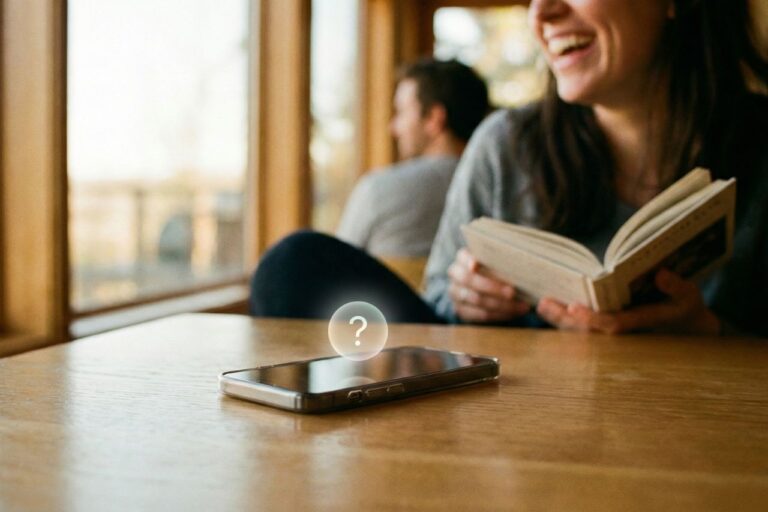
We have waged a war on boredom. We treat every unfilled second of our lives as a problem that needs to be solved. We solve it with the smartphone. The elevator ride is 30 seconds long? Check Instagram. The friend goes to the bathroom at dinner? Check Twitter.
We have successfully eradicated “Micro-Boredom” from our lives.
But in doing so, we might have accidentally killed our creativity, our ability to solve problems, and our mental peace.
Here is why boredom is actually a biological necessity, and how to reclaim it in a hyper-stimulated world.
The “Default Mode Network”
To understand why boredom matters, we have to look inside the brain.
When you are focused on a task (like writing an email or scrolling TikTok), your brain is in “Executive Attention Mode.” It is processing external stimuli.
But when you stop focusing—when you are bored, zoning out, or daydreaming—your brain doesn’t turn off. It switches to a different system called the Default Mode Network (DMN).
Think of the DMN as your brain’s “Background Processing” system. While you are staring at the ceiling, your DMN is furiously working to:
- Consolidate memories.
- Plan for the future (autobiographical planning).
- Connect disparate ideas (creativity).
The “Shower Thought” Phenomenon Why do you get your best ideas in the shower? Because it is one of the few places left where you can’t bring your phone. You are forced to be bored for 10 minutes. In that silence, the DMN activates, connects two unrelated dots, and voila—you have a breakthrough.
By filling every gap in our day with digital noise, we are preventing the DMN from ever turning on. We are consuming so much information that we never give ourselves time to process it.
The Cost of Constant Entertainment
We are raising a generation (and re-wiring ourselves) to have Zero Tolerance for Boredom.
This leads directly to the Popcorn Brain effect. When we can’t handle 10 seconds of stillness, we lose the ability to do anything difficult.
- Creativity Dies: Creativity is connecting things. If you are always inputting data (scrolling), you never have output (ideas). You become a consumer, not a creator.
- Anxiety Rises: The DMN is also responsible for emotional processing. If you distract yourself every time you feel a negative emotion, you never process it. You just bury it under a layer of memes, where it festers into low-level anxiety.
How to Practice “Strategic Boredom”
You don’t need to stare at a wall for 3 hours. You just need to reclaim the “In-Between Moments.”
Here is a simple protocol to reintroduce boredom into your life without going crazy.
1. The “No-Phone” Transition
When you move from one place to another, do it offline.
- Walking to the car? No phone.
- Waiting for the elevator? No phone.
- Standing in line for coffee? No phone.
Observe the world. Look at the people around you. Let your mind wander. It will feel uncomfortable at first (that’s the Dopamine Detox kicking in), but eventually, it will feel like freedom.
2. The Commute Reset
If you drive or take the train, try doing it without audio once or twice a week. No podcast, no music, no audiobook. Just you and the movement. This is prime time for your Default Mode Network to solve the problems that have been bugging you at work.
3. Manual Tasks (Analog Mode)
Engage in Analog Hobbies that occupy your hands but leave your mind free. Washing dishes, folding laundry, or gardening are perfect for this. Resist the urge to prop up an iPad while you do them. Let your mind float while your hands work.
Boredom is a Luxury
In an attention economy, reclaiming your own thoughts is an act of rebellion.
The tech giants want you to believe that boredom is a failure. They want you to believe that every second must be filled with “content.”
They are wrong. Boredom is not emptiness; it is fertile soil.
It is the space where you remember who you are. It is the space where you figure out what you actually want to do with your life, rather than just watching other people live theirs.
So, the next time you feel bored, don’t reach for your pocket. Stay with it. The feeling won’t kill you. It might just give you your next great idea.